
18 August 2026
Can You Put A Green Roof On A Garage In Weston-super-Mare?
Usually yes - and a sedum roof suits Weston's dry, bright coastal climate better than most towns. The two questions that decide it are weight and waterproofing.
Every few weeks somebody asks us this, usually a little apologetically, as though wanting a small meadow on the garage is an eccentric confession. It is not. It is a perfectly buildable thing, the neighbours will be politer about it than you expect, and - here is the part nobody anticipates - Weston is actually a better town for it than most of Britain.
The honest answer is: usually yes, and the exceptions are decided by two questions that have nothing to do with gardening. Can the structure carry the weight? And what is going underneath the plants? Get those two right and the green part more or less looks after itself. Get either wrong and you have built the most picturesque failure in North Somerset.
Here is the whole picture, including the numbers most articles on this subject conveniently skip.
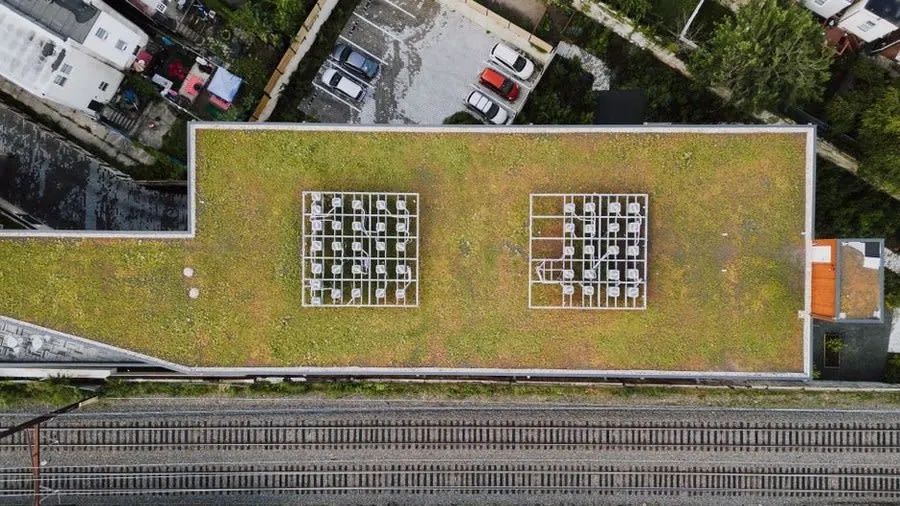
What people mean by a green roof, and which kind a garage can have
The term covers everything from a park on top of an office block to a tray of stonecrop on a bin store, so it pays to split it.

Intensive green roofs are the deep ones - proper soil, shrubs, sometimes lawns - and they belong on concrete structures designed for them from day one. Forget those for a garage.
Extensive green roofs are the relevant kind: a shallow build-up, typically under 120mm deep, planted with sedums - low, drought-hardy succulents that flower in yellows, whites and pinks through early summer and blush red when stressed. They arrive as pre-grown mats and roll out rather like turf. The Green Roof Organisation, which publishes the UK’s code of practice for this work, recommends at least 80mm of growing substrate for a sedum installation, and that figure quietly rules out the “sprinkle some soil on the felt” approach you occasionally see attempted.
For a garage, an extension, a bin store or a garden office, extensive sedum is the answer. Everything below is about that.
This is a very old idea wearing new marketing
It is worth saying, because green roofs get sold as an innovation: people have been living under planted roofs for over a thousand years.
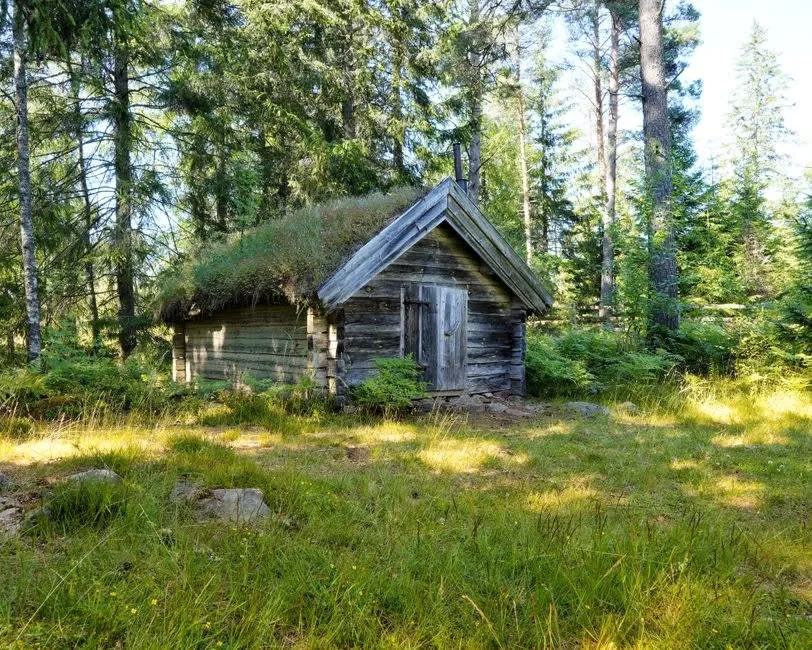
Scandinavian sod roofs - birch bark for waterproofing, turf for weight and insulation - kept Norwegian farmhouses warm for centuries, and the survivors are still shrugging off weather that makes a Channel gale look like a fan heater. What has changed is not the concept but the layers: modern membranes do the waterproofing properly, engineered drainage replaced luck, and sedum replaced turf because it weighs a fraction as much and does not need scything.
The reason this history matters to you is confidence. This is not an experimental product category where you are the test case. It is a mature system with a British code of practice, fitted in volume across Europe for decades. The failures are not mysterious either - they are almost always one of the two questions from the top of this page, answered carelessly.
The weight question, with actual numbers
Here is the part that decides most cases, so let us do it properly.

A lightweight extensive sedum system typically weighs between 80 and 120 kilograms per square metre once it is fully saturated - and saturated is the only number that counts, because the roof has to carry it on the worst day, not the average one. Picture an adult standing on every single square metre of the roof, permanently, and you have the load about right.
Now consider what most Weston garages were built to carry: a sheet of chipboard and two layers of felt, with joists sized in the 1960s or 70s by someone who had never heard of sedum. Some of those structures have margin to spare. Many need doubling up on the joists or additional bearers before a green roof is responsible. A few - particularly prefab concrete-panel garages - are simply not candidates, and the kind thing is to say so early.
None of this is guesswork territory. The joists get inspected and measured, the sums get done, and if strengthening is needed it appears on the quote as its own line. A firm that quotes a green roof without ever looking at the structure underneath has skipped the only question that matters. Where the deck itself has gone soft, you are into the same conversation as any flat roof repair - rotten boards come out before anything goes on top, green or otherwise.
What actually sits under the plants
From the ceiling upwards, a proper build-up runs: deck, insulation if the building warrants it, a root-resistant waterproof membrane, a drainage layer, a filter fleece, substrate, and finally the sedum itself.
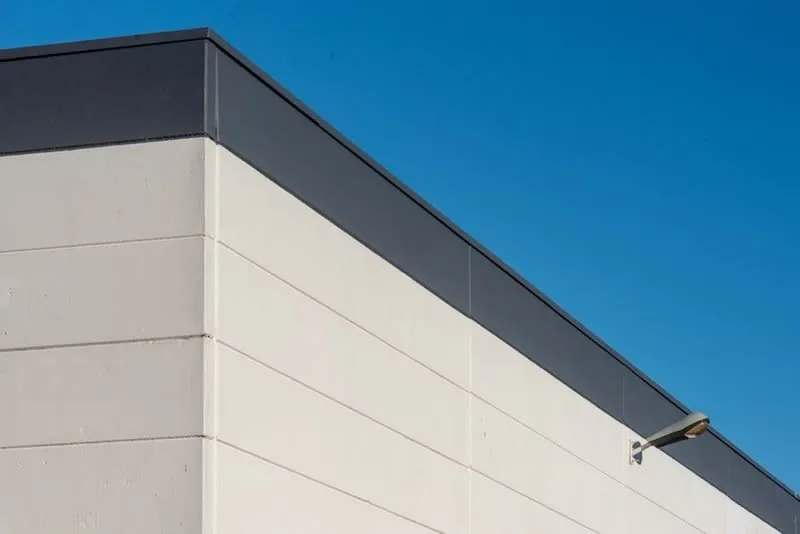
The membrane is the load-bearing decision. Once the green layers are down, you will not be lifting them to find a leak - so the waterproofing underneath has to be specified for decades, and it has to be certified root-resistant, because roots are patient in a way sealant is not. In practice that means a quality EPDM rubber membrane or an equivalent single-ply rated for green roof use, fitted with more care at the edges than the middle, same as always.
The drainage layer is the unsung part. Sedums are drought plants; what kills them is sitting in water. The dimpled drainage board under the substrate holds back a little moisture for dry spells and sheds the rest towards the outlet, which stays accessible via a gravel margin rather than buried under planting. Around the perimeter and at the outlet, a strip of washed pebbles or pavers keeps the growing layer away from the edges - which happens to be exactly where wind gets under things, and on this coast that is not a detail to improvise.
What it does for the roof, and what lives in it
The pitch for green roofs is usually environmental. Fair enough - but the selfish arguments are just as good, so let us have both.

Selfishly: the planting is a sacrificial shield for the membrane underneath. Ultraviolet light and thermal cycling are what age a roof covering, and a membrane under substrate sees neither - which is why green-roofed membranes routinely outlast exposed ones. The build-up also soaks up a share of each downpour and releases it slowly, taking the spike out of what your gutters and the drains below have to swallow. And a layer of substrate over the garage takes the edge off both the summer oven effect and the winter chill in whatever sits beneath it.
For the wildlife, a sedum roof in flower is a service station. Bees, hoverflies and butterflies work it through June and July, and in a town where gardens keep giving way to paving, a garage roof quietly puts habitat back. The RHS guidance on green roofs covers planting for pollinators well, and Avon Wildlife Trust - whose patch includes North Somerset - has been banging the drum for exactly this kind of small urban habitat for years.
The Weston-specific part, which is mostly good news
Here is the paragraph that would not survive being copied onto a site for another town.

Sedum’s great enemy is waterlogging, and Weston is one of the drier towns in Britain - roughly 914mm of rain a year against a national average nearer 1,163mm, with plenty of bright coastal light. That is close to ideal sedum country. The same plants sulk on a soggy Pennine roof and thrive on a bright, breezy one, which is what your garage is offering. Even the salt-laden air changes little: stonecrops grow wild on British coastal walls and shingle, and they cope with our sea breeze far better than a fence panel does.
The wind itself is the one local factor demanding respect. The south-westerly that comes off the Channel gets under loose edges of everything, which is why the pebble margins, the edge trims and the first metre of matting get fixed and ballasted properly rather than laid and hoped for. Same rule as every roof in this town: the middle is easy, the edges are the job.
Two admin notes. If you are inside the Great Weston conservation area - or the village conservation areas at Uphill, Hutton, Banwell or Bleadon - a quick word with North Somerset Council before you start is wise, though a green roof on a rear garage rarely troubles anyone. And if you are reading this from Burnham-on-Sea, Highbridge or Cheddar, your council is Somerset Council, not North Somerset - a distinction that has confused better people than us. If the job crosses the 25 per cent re-covering threshold, the insulation rules we covered in the building regulations guide apply here too.
What it costs, what it needs, and an honest verdict
Money first. As a rough local guide, adding an extensive sedum build-up to a garage that is being re-covered anyway typically puts £60 to £110 per square metre on top of the membrane work - so on a single garage, somewhere in the region of £1,000 to £2,000 above a plain rubber roof, more if the structure needs strengthening. Quoted as a standalone project on a roof that did not otherwise need touching, the sums rarely flatter it; as an add-on at re-covering time, they usually do.
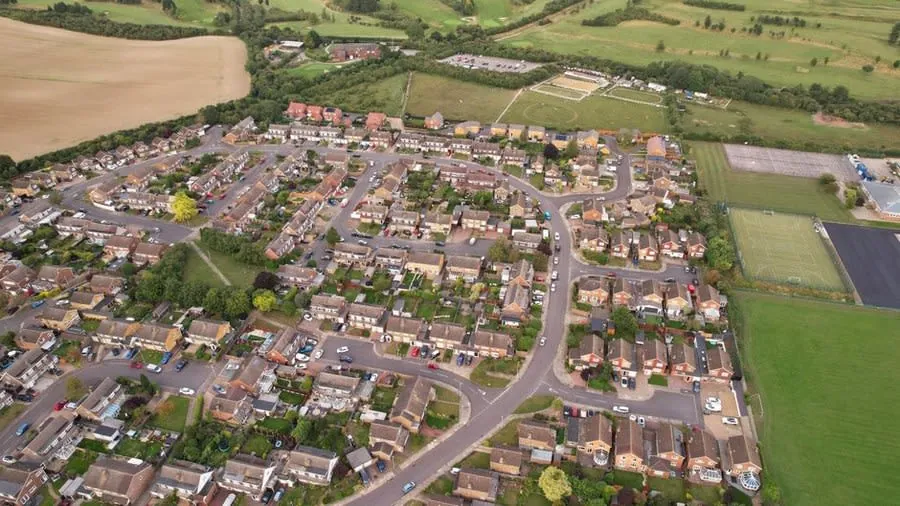
Upkeep is two visits a year - spring and autumn. Pull the windblown weeds and the ambitious sycamore seedlings, check the margins and the outlet, feed it if it looks hungry. That is the list. It is less work than a window box, and the failure mode to actually fear is the same one as every flat roof in Weston: an outlet nobody has looked at since the coalition government.
The verdict, honestly: if your garage roof has years left in it, wait. The economics only sing when the re-covering is due anyway, and the membrane going under the sedum needs to be new, not nursed. But if your felt is on its last winter and you were going to replace it regardless - that is the moment. For a modest premium you get a roof that outlasts an exposed one, quietens the drainage, feeds the bees, and turns the view from the back bedroom from black rubber into a meadow that flowers every June.
We fit the membrane, the build-up and the sedum, and the structural check comes first, every time. Ask us whether your garage can carry one - the answer costs nothing, and it is more often yes than people expect.
Frequently Asked Questions
Do I need planning permission for a green roof on a garage?
Usually not - re-covering a garage roof is normally permitted development, and swapping felt for sedum does not change the building's height or footprint. The exception worth checking is a conservation area, and Weston has a large one: the Great Weston conservation area, plus separate ones over the village cores at Uphill, Hutton, Banwell and Bleadon. A quick call to the council before ordering anything is cheaper than the alternative.
How heavy is a sedum green roof?
The lightweight extensive systems that suit garages typically weigh somewhere between 80 and 120 kilograms per square metre when fully saturated - roughly an adult standing on every square metre of the roof, all the time. That is why the structural check comes before anything else. Some garage roofs take it comfortably, plenty of 1960s and 1970s timber ones need strengthening first, and a few are honestly not candidates.
How much maintenance does a sedum roof need?
Two visits a year, in spring and autumn - pull out any windblown weeds and tree seedlings, check the gravel margins and the outlet are clear, and give it an occasional feed if it is looking tired. It is closer to owning gutters than owning a lawn. What kills sedum roofs is not neglect of the plants but a blocked outlet, exactly like every other flat roof.
Can you put a green roof on an existing felt or rubber roof?
Not directly on old felt, no - the covering underneath a green roof has to be sound for decades and resistant to roots, because you will not be lifting the planting to patch it. The usual approach is a new root-resistant membrane first with the green build-up on top, which is why the sensible time to go green is when the roof needs re-covering anyway.
Free Flat Roof Survey
Somebody comes out, walks the roof and tells you what is wrong before mentioning a price. Anywhere across Weston-super-Mare and North Somerset.