
14 August 2026
Flat Roof Condensation Or A Leak? How To Tell The Difference
If your flat roof only misbehaves in winter and mysteriously recovers by May, you probably do not have a hole in it. Here is how to tell, and what to do instead.
Every winter we go out to flat roofs that are not leaking. The homeowner is certain they are - there is a damp patch on the ceiling, it is getting worse, and two roofers have already been up and found nothing wrong. One of them applied sealant to a joint that looked slightly suspicious. It made no difference, which surprised nobody except the person who paid for it.
What is usually happening is condensation forming inside the roof itself, and it is comfortably the most misdiagnosed problem in flat roofing. It looks exactly like a leak from underneath. It behaves nothing like one. And crucially, no amount of work on the top surface of the roof will ever fix it, because the water is not coming from outside your house - it is coming from inside it.
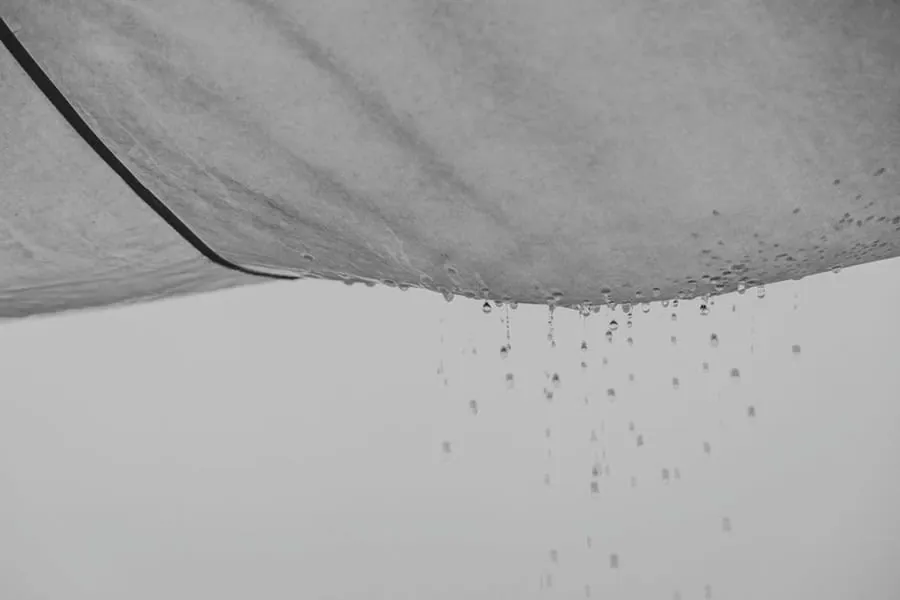
The one test that settles it: when does it happen?
If you take nothing else from this article, take this. A leak follows the weather. Condensation follows the temperature.
A genuine leak appears during rain or shortly after it, and it does not care what time of year it is. A wet fortnight in July will set it off just as reliably as a wet fortnight in January. Condensation does the opposite. It is at its worst on cold, still, dry mornings, it is dramatically better in mild weather, and there is a good chance it vanishes completely somewhere around May without anybody going anywhere near the roof.

So before you ring anybody, think back. Was the problem there last August? Did it clear up on its own in spring? Does it seem to be worse after a cold night than after a wet one? If the answers point at temperature rather than rainfall, you are almost certainly not looking for a hole.
The second useful clue is the shape of the damp. Leaks tend to be concentrated - a stain that grows outward from a point, because water is arriving at one place and spreading from there. Condensation tends to be diffuse. It shows up across a wider area, sometimes as several patches at once, sometimes just as a ceiling that feels cold and clammy and eventually starts growing something in a corner.
Why it happens: the cold deck problem
Almost every flat roof in Weston built before the mid-1990s is what the trade calls a cold deck. The insulation sits between the joists, underneath the roof boards, with a void above it. The theory was that this void would be ventilated - air moving through from one side to the other, carrying away any moisture that got in.
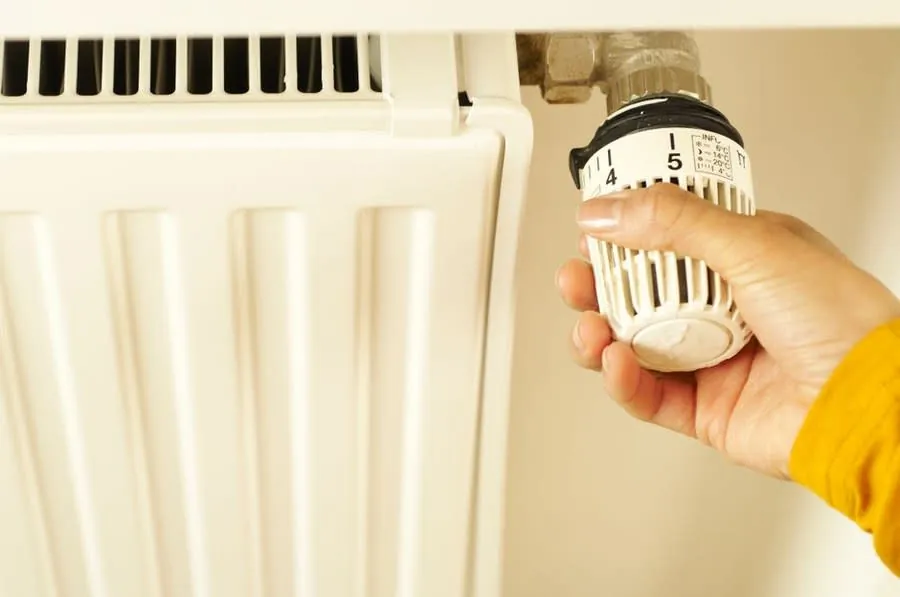
In a textbook it works. In an actual house, forty years on, it very often does not. The ventilation paths get blocked with insulation somebody stuffed in later to make the room warmer. The vents were never adequate to begin with. Somebody boarded in the eaves during a re-render. And once the air stops moving, the void becomes a trap.
Here is the mechanism. The room below is warm and full of water vapour, because people live in it - cooking, showering, drying washing, breathing. Warm air holds a lot of moisture. That air finds its way up through gaps in the ceiling: around light fittings, at the loft hatch, through the joins in plasterboard, anywhere that has not been sealed. It reaches the void, hits the underside of a roof deck that has been sitting out in a January night, and cools. Cold air cannot hold as much moisture as warm air, so the surplus condenses out as liquid water on the underside of the deck.
Then gravity does the rest. It runs down the joists, soaks into the plasterboard, and appears on your ceiling as a damp patch that looks for all the world like a leak.
The clue that it is doing structural damage
The reason this matters more than a stain is that the water is forming inside the structure rather than running through it. On a real leak, water comes through a hole and lands on your ceiling. On a condensation problem, water is forming directly on the timber that holds your roof up, and doing it every cold night for years.
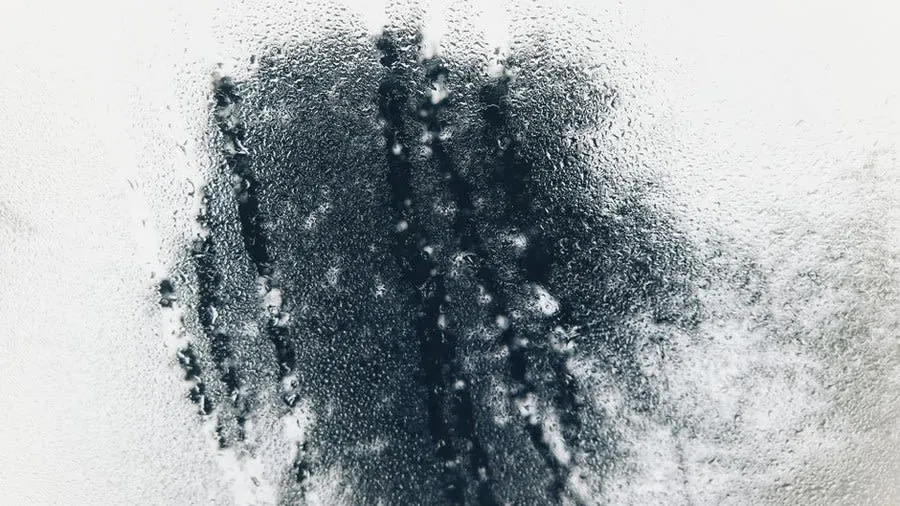
Timber that stays damp rots. Not quickly - it takes years, which is exactly why this problem is so good at hiding. But by the time a cold deck roof is producing enough water to show on the ceiling below, the joists and the underside of the deck have usually been wet every winter for a long time. When we strip a roof like that, the boards frequently come off in pieces.
Mould is the other symptom, and it is the one that tends to get people to pick up the phone. Black spotting in the corners of the room, along the ceiling edges, sometimes on the wall just below the ceiling line. That is not a cleaning problem and painting over it achieves nothing beyond a brief improvement in morale.
Things that make it worse, and some are counterintuitive
A few habits reliably turn a manageable cold deck into a wet one.
The big one is adding insulation between the joists without thinking it through, and it is infuriating because the intention is so obviously good. Stuffing more insulation into the void makes the deck above it colder, since less heat is now reaching it, and a colder surface condenses more water rather than less. Worse, the new insulation usually blocks whatever ventilation path was there. People do this to fix a cold room and end up with a wet roof.
Then there is everything you do in the room itself. Drying washing indoors puts a surprising volume of water into the air of a house, and in a room under a cold deck most of it has to go somewhere. Modern draught-proofing, new windows and a door that actually shuts are all excellent for your heating bill and all quietly removing the accidental ventilation that used to carry that moisture away. And turning the heating down in a room nobody uses is close to a perfect condensation machine: the air still carries moisture from the rest of the house, the surfaces are simply colder when it arrives.
There is a Weston-specific footnote here too. Our winters are mild by national standards, which sounds like good news and is mostly irrelevant - condensation needs a temperature difference rather than a hard frost. But head inland and it changes. Up towards Winscombe, or under the Mendips at Cheddar, it genuinely gets colder than it does on the seafront, and cold deck roofs up there have a harder time of it than the ones in town.
What actually fixes it
The permanent answer is to stop having a cold deck. That means moving the insulation from between the joists to above the deck, under the covering, which is what the trade calls a warm roof. Do that and there is no longer a cold surface anywhere inside the build-up for moisture to condense onto. The joists end up on the warm, dry side of the insulation. The mechanism is not mitigated, it is removed.
The obvious catch is that the insulation goes underneath the covering, so the covering has to come off. That makes this a job to do when the roof is due anyway rather than a standalone project - at which point the extra cost is modest, and you also get to fix the falls while everything is open. Doing it as its own separate job later means paying twice for the same strip-off.
In the meantime, there are things worth doing that genuinely help. Get a decent extractor working in any kitchen or bathroom under that roof, and actually use it. Stop drying washing in the room. Keep it heated to a steady low temperature rather than letting it swing from freezing to warm. And if somebody has packed insulation into the void over the years, it is worth finding out whether it has blocked the ventilation, because unblocking it can make a real difference for very little money.
What will not help, and we say this having taken it off a lot of roofs: sealant. Applying anything to the top surface of a roof to solve a problem being generated inside the house is a category error. If you have been sold that once already, you are not the first.
When it is genuinely a leak after all
None of this is an argument that flat roofs do not leak. They do, constantly, and around Weston the causes are fairly consistent - wind lifting an edge, a split at an upstand, or an outlet so blocked that the roof has effectively become a shallow tank.
The signature of a real leak is different in every respect. It arrives with rain. It is concentrated rather than spread. It gets worse in a downpour rather than on a cold clear night. And there is a useful sub-clue: if it only shows up when the wind is blowing rather than whenever it rains, something at an edge or an upstand is being driven at sideways, which is extremely common on the exposed roofs at Uphill, along the seafront and out at Locking.
Sometimes it is both, which is the genuinely annoying scenario. A roof with a failed covering and a cold deck construction will produce a leak in autumn and condensation in February, and chasing one while ignoring the other is how people end up on their third roofer. That is why the first thing worth establishing is not where the water is coming through, but when.
If yours is doing something you cannot make sense of, have somebody come and look at it - including from underneath, which is where half the answer usually is. It costs nothing, and there is a reasonable chance the answer is not the one you were dreading. You might also want to read our guide to choosing a flat roofing company before you let anybody up there.
Frequently Asked Questions
How do I know if my flat roof is leaking or just condensating?
The timing is the giveaway. A genuine leak follows the rain - it appears during or shortly after wet weather and it does not care what month it is. Condensation follows the temperature. It is at its worst on cold dry mornings in January and February, it eases off as spring arrives, and it often disappears completely by May without anybody touching the roof.
What is a cold deck flat roof?
It is a construction where the insulation sits between the joists, below the roof deck, leaving a void above it. Almost every flat roof built in the UK before the mid-1990s is one. The design relies on that void being ventilated to carry moisture away, and in practice the ventilation is very often blocked, inadequate or was never really there.
Can you fix flat roof condensation without replacing the roof?
Sometimes you can improve it significantly - better extraction in the room below, clearing blocked ventilation paths, and reducing the moisture being generated indoors all help. But if the underlying problem is a cold deck construction with a failed vapour control layer, the permanent answer is converting it to a warm roof, and that is done when the covering is replaced.
Does condensation damage a flat roof?
Yes, and more seriously than most people assume, because the damage happens to the structure rather than the finish. Water forming inside the build-up sits against the joists and the underside of the deck. Timber that stays damp rots, and by the time it shows on the ceiling below the boards above may have been wet for several winters.
Free Flat Roof Survey
Somebody comes out, walks the roof and tells you what is wrong before mentioning a price. Anywhere across Weston-super-Mare and North Somerset.