
8 October 2026
Portishead And Nailsea Flat Roofing: Two Neighbouring Towns, Two Different Jobs, And Prices For Both
Flat roofing in Portishead and Nailsea - marina terraces and apartment blocks, 1960s and 70s estate garages, shop and unit roofs, estuary wind, North Somerset Council rules and local prices.
Portishead and Nailsea sit about four miles apart, with the Gordano valley and a ridge of high ground between them, and both answer to North Somerset Council. That is roughly where the similarity ends. Portishead (26,366 people at the 2021 census) faces straight out over the Severn estuary, and a large slice of its newer housing was built with flat roofs on purpose. Nailsea (15,539 people) is inland, and most of its flat roofs are the garages, porches and link extensions that came with its 1960s and 70s estates. Different housing and different weather, so the roofs fail for different reasons. This guide covers flat roofing in Portishead and Nailsea from the paying end: what each type of job involves, what it tends to cost, and what the council needs to see. We’re half an hour or so up the M5 from our yard in Weston, and both towns are part of our regular round.
Flat roofing in Portishead and Nailsea: same council, opposite problems
The quickest way to see the difference is to look at what fails. In Portishead the call is usually about a detail on a building that may be twenty years old or less, such as a terrace door threshold, a parapet capping or an outlet hidden under decking. In Nailsea it is more often about age. A felt roof laid in 1974 has simply run out of years, and so have the two either side of it.
That shapes how we price. A Portishead job often starts with detective work and paperwork, because the roof may belong to a management company and the fault may still be covered by a building warranty. A Nailsea job is usually more straightforward: lift the old covering, see what the boards look like, and put down a new roof in EPDM rubber or felt. Each town has its own area page if you want the wider picture - flat roofing in Portishead and flat roofing in Nailsea - while this post stays on the roofs themselves.
The marina quarter, where flat was the design brief
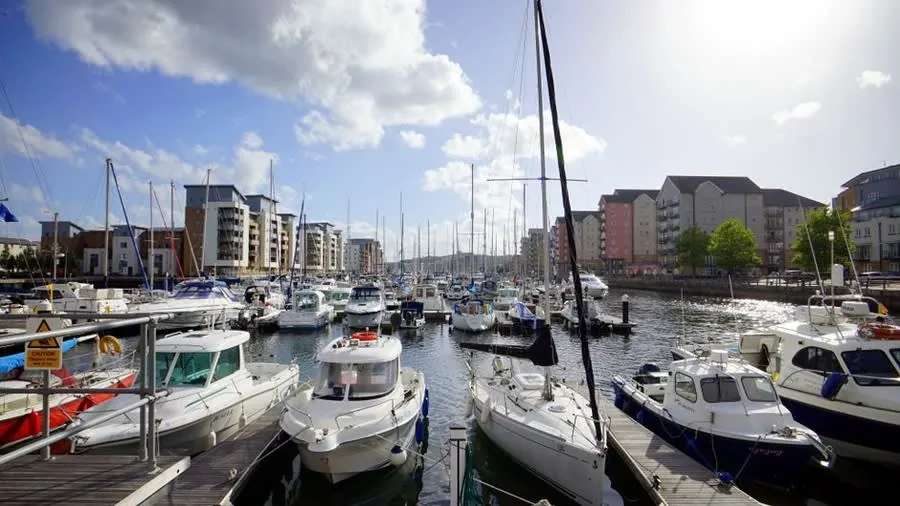
Portishead’s dock closed in 1992 and the area around it has since been rebuilt as a marina with 250 pontoon berths, ringed by apartments and town houses. The two coal-fired power stations that once stood nearby (one ran from 1929 to 1976, the other from 1955 to 1982) went too, and Port Marine and the Ashlands now cover much of that ground. Plenty of what was built there treats the roof as usable space. Roof terraces sit over bedrooms, balconies step back over the flat below, and parapets hide the drainage from view.
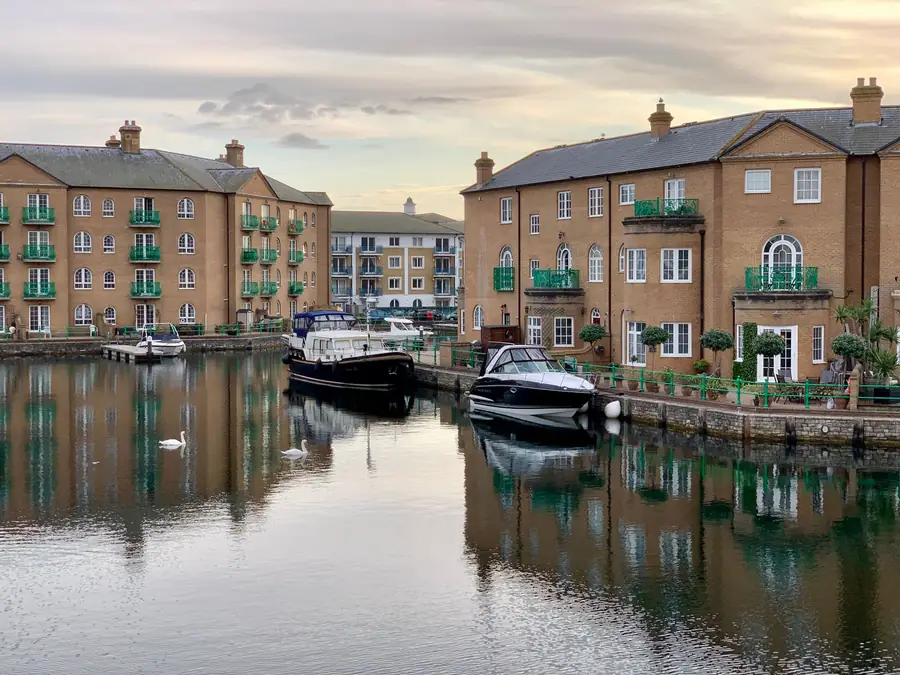
When those roofs leak, the membrane itself is rarely the culprit. In the marina jobs we see, the water nearly always gets in at a junction: a door sill set too low to allow a proper upstand, an outlet choked under paving slabs on pedestals, or a balustrade post bolted through the waterproofing. Finding it can mean lifting the deck finish in sections, which is slow but beats guessing.
Who has to agree before anything happens
Most marina terraces are not wholly owned by the flat that uses them. The waterproofing usually forms part of the building’s structure and sits with the freeholder or management company, even where the lease gives you the right to use the space. We are often instructed by managing agents, and we write reports they can put in front of residents. If the block is young enough to still be under a new-home warranty, that provider should see the defect before anyone strips it. For older buildings, the government’s guidance on the Building Safety Act is worth a read, as the Act lengthened the time limits on some claims for defective work on homes. Our post on who pays for a flat roof on a flat or maisonette covers how service charge splits usually work.
Redcliffe Bay, Battery Point and the wind up the estuary
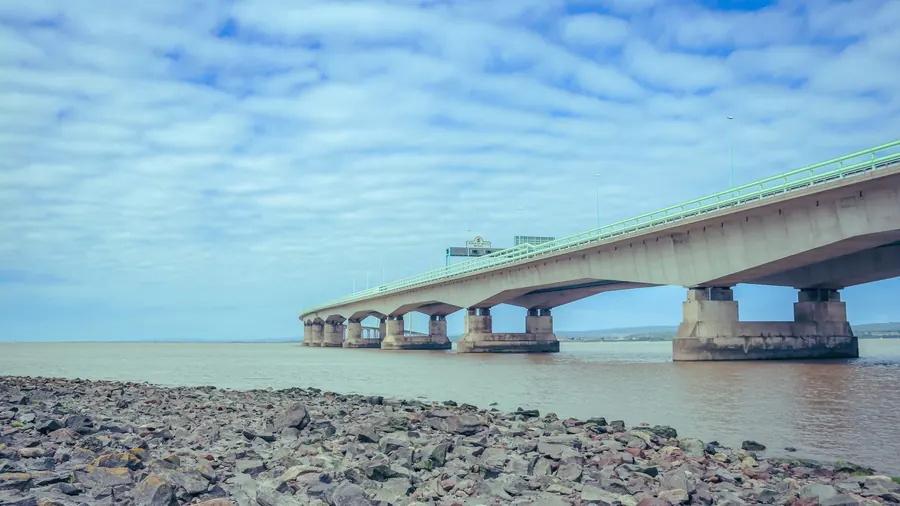
Portishead looks north-west across the water to Wales, across an estuary that is never still for long. Spring tides rise and fall by more than 12 metres here, and the wind gathers speed as the channel narrows towards the bridges. Battery Point and the houses along the cliffs at Redcliffe Bay take that weather head-on. Most homes in Redcliffe Bay have a view of the Bristol Channel, which is lovely to look at and hard on a flat roof edge.
Wind on a flat roof pulls upwards rather than pushing down, and it attacks the perimeter first. On exposed Portishead properties we fix edges closer together than a sheltered job would need, bond membranes fully rather than relying on part-adhesion, and use stainless fixings and coated trims, since salty air off the water corrodes bare metal quickly. Up the hill in the older streets around the High Street and West Hill the shelter improves, but most estuary-facing roofs get the heavier spec as standard. Nailsea, by contrast, is far enough inland that salt barely comes into it, though the moors on its southern edge can keep a roof damp on still autumn mornings.
Nailsea’s estates and the felt they were built with
Nailsea grew from a village famous for its glassworks (1788 to 1873) into a commuter town, and much of that growth came in a single long wave of estate building. Walk through Golden Valley, Trendlewood or the streets off Youngwood Lane and you see the same features again and again. There are link-detached houses with flat-roofed garages between them, single-storey extensions at the back, and porches and canopies topped in felt.
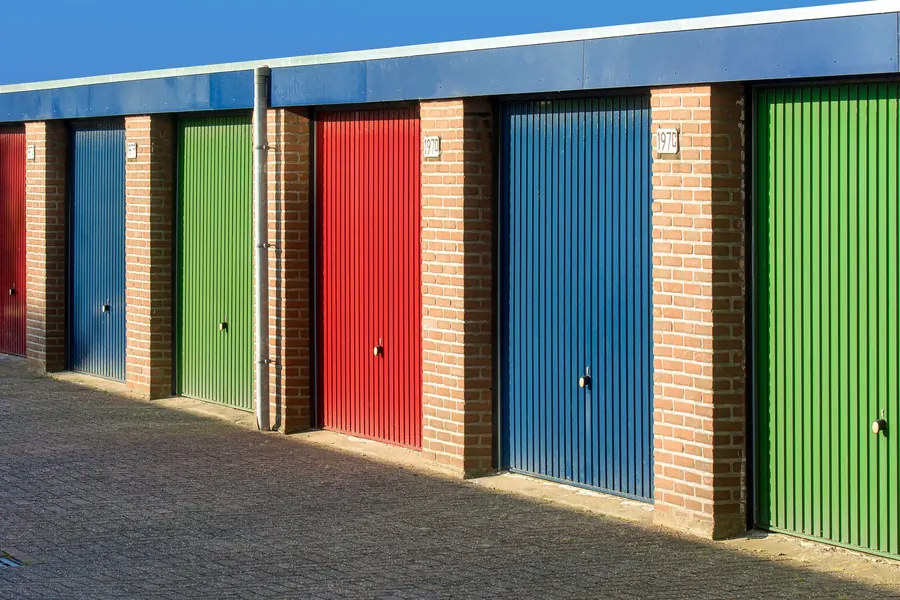
Houses built in the same year wear out in the same year. When one garage roof on a Nailsea close starts leaking, it’s worth looking at the neighbours’ roofs as well. Joining up with them can save on skips and access, and on a shared garage block it is often the only sensible way to get a continuous roof that actually drains. Original felt from that era was usually a three-layer built-up roof on chipboard or softwood boards, and wet chipboard sags and crumbles. If you can see dips holding water after rain, budget for new decking, not just a new top layer.
When the garage roof is corrugated sheet
Some Nailsea garages, especially detached prefabricated ones, were roofed in corrugated cement sheet, and some of that sheeting will contain asbestos. It isn’t a crisis, but it does change the order of work. We get a sample tested first. If it comes back positive, removal follows the HSE’s asbestos essentials task sheets, with the sheets wetted, lowered whole and wrapped, never broken up on site. Then the garage gets a proper timber deck and a modern covering.
Shop roofs in Nailsea’s precinct and units around Portishead
Nailsea’s town centre was built around the same time as its estates, and the parades around Crown Glass Place, Somerset Square and Colliers Walk carry large areas of flat roof over shops, offices and flats. Those roofs are on the same timetable as the houses, and several have already been re-covered at least once, sometimes with a coating over a failing felt roof that bought a few years and no more.

In Portishead the commercial work is more varied. The retail warehouses on Wyndham Way, the older premises off the High Street and the trade units out towards the M5 all have different roof types, from built-up felt to single ply membrane and profiled metal with gutters that need lining. Plant on the roof is the usual complication, since air conditioning units and extract fans each need their own upstand and flashing. Our commercial flat roofing team phases this work so a shop can keep trading, with each section watertight before we leave at night.
Flat roof prices for Portishead and Nailsea jobs
These are our working ranges for both towns. There is no extra charge for the drive from Weston.

For typical Nailsea work:
- Single garage in two-layer torch-on felt: £900 to £1,700
- Single garage in EPDM rubber: £1,400 to £2,600
- Single garage in GRP fibreglass: £1,800 to £3,200
- Rear extension of 20 to 30 m² in rubber: £2,200 to £4,000
- Warm roof insulation added while it’s off: £45 to £80 per m²
For typical Portishead work:
- Walk-on terrace or balcony in GRP, 10 to 20 m²: £2,500 to £4,500
- Repair to a single fault such as a threshold or outlet: £180 to £600
- Repair involving deck timbers: £400 to £1,100
- Apartment block or commercial roof in single ply: £70 to £120 per m², with scaffold or access equipment on top
What moves a figure within those ranges is nearly always hidden until the old covering comes off. Is the timber sound? How many layers of old felt are there to strip and dispose of? Can a skip go on the drive, or does everything have to be carried through the house? On marina blocks, access equipment and the time spent protecting the terrace finish can be a sizeable part of the bill. Our flat roof cost guide breaks each line down, and our recent guide to flat roofing in Burnham-on-Sea and Highbridge shows how the same ranges play out in a town with a different council.
North Somerset Council: what it wants to see from each town
Both towns sit within North Somerset Council’s area, so planning and building control go through the same office whether you live on the waterfront or in Trendlewood. For most flat roof work the planning answer is simple. Replacing a covering on a house with something of similar appearance doesn’t need permission. Changing the roof’s height, adding a parapet you can see from the street, or turning a flat roof into a balcony or terrace does. Houses get some permitted development rights, but balconies and raised platforms are excluded. Flats get none at all, which catches out marina owners who assume a bit of extra outdoor space is a private matter between them and their builder.
Building regulations follow a separate track. Renewing more than a quarter of a roof normally counts as renovating a thermal element, so the new roof has to meet current insulation standards. The work must be notified to building control, or self-certified by a roofer registered with a competent person scheme. North Somerset’s planning and building control pages set out how to apply and how to check whether your street falls under any extra controls. Before work starts we confirm which route applies to your roof and make sure you end up with the paperwork. That matters when you come to sell.
If you’re in either town and something on a flat roof has started to worry you, book a free survey in Portishead or Nailsea and we’ll come and take a look.
Frequently Asked Questions
Who do I complain to if the terrace on my Portishead marina flat was badly built?
Start with your management company or freeholder, because a terrace over someone else's home is almost always part of the building's structure rather than something you own outright. If the building is still inside its new-home warranty, the warranty provider should hear about it before anyone strips the roof. For older blocks, the Building Safety Act 2022 extended the time limit for some claims under the Defective Premises Act to 30 years for work finished before June 2022, so it can be worth taking legal advice before paying for a repair that removes the evidence.
My Nailsea garage roof is grey corrugated sheet. Is it asbestos?
It might be. Asbestos cement was widely used for garage roofs until it was banned in 1999, and a lot of Nailsea garages went up well before then. The only way to know is to have a small sample tested. Sheeting in good condition is low risk if left alone, but it should not be drilled, cut, jet-washed or walked on. Removing it is normally non-licensed work that still has to follow HSE guidance, and the waste goes to a site that accepts asbestos.
Do I need permission from North Somerset Council to replace my flat roof?
Replacing a covering with something that looks much the same does not normally need planning permission in Portishead or Nailsea. Building regulations are a separate matter: if you are renewing more than a quarter of the roof, the work usually has to bring the insulation up to current standards, and it must either be notified to building control or self-certified by a roofer registered with a competent person scheme. Turning a flat roof into a balcony or terrace needs planning permission.
How much is a new flat roof on a Nailsea garage?
Our ranges for a single garage of 15 to 18 square metres are £900 to £1,700 in two-layer torch-on felt, £1,400 to £2,600 in EPDM rubber and £1,800 to £3,200 in GRP fibreglass. Most of the variation comes from the timber underneath. If the deck along the front edge has been wet for years, boards and sometimes joist ends need replacing, and that is the line that moves the price. Removing an asbestos cement roof first is priced separately once the sheet has been tested.
Free Flat Roof Survey
Somebody comes out, walks the roof and tells you what is wrong before mentioning a price. Anywhere across Weston-super-Mare and North Somerset.