
14 August 2026
Replacing A Commercial Flat Roof Without Closing The Business
How a shop, unit or workshop roof gets replaced around Weston-super-Mare without losing trading days, soaking stock or blocking a fire exit.
The roof over a commercial unit fails in exactly the same way as the one over somebody’s kitchen extension. The difference is what sits underneath it.
On the industrial estates off Winterstoke Road, on Oldmixon Crescent, and across the shop parades in Weston town centre, that means stock, equipment, staff and trading days. Weston Industrial Estate alone runs to twenty-two acres with units from around 1,200 square feet upwards, roughly two miles south of the town centre, and a good proportion of that stock is flat-roofed and now old enough to be reaching the end of its covering. Add the light industrial buildings around Highbridge and Bridgwater and there are a great many roofs in this area quietly approaching the same conversation.
The good news is that almost none of those businesses need to close. The roofing is the straightforward part. The planning is where a commercial job is won or lost, and here is what that actually involves.
Nothing gets opened that cannot be closed the same day
This is the principle everything else hangs off, and it is worth stating plainly because it is the thing that protects your stock.

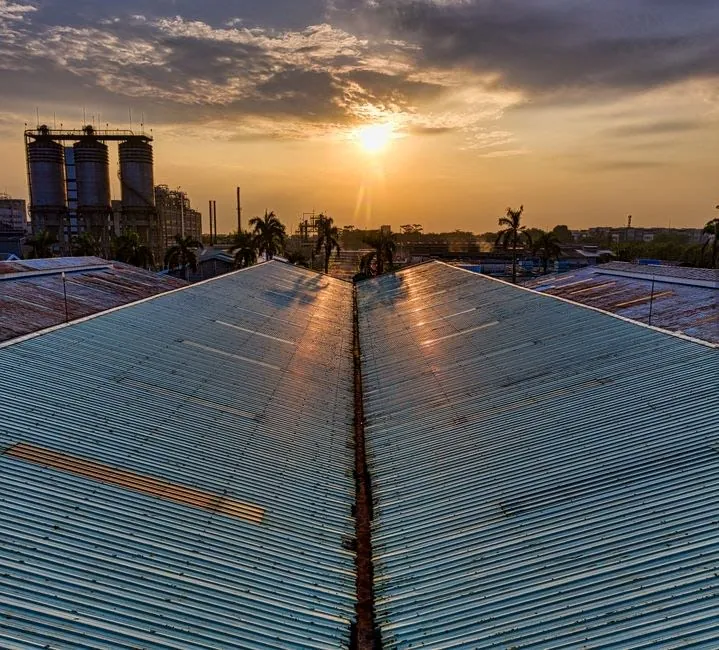
A large roof gets divided into sections, and each section is stripped, decked, insulated and made watertight within a single working period. The roof is never left open overnight and never left relying on a sheet and a hopeful forecast. That occasionally means a job takes an extra day or two compared with the theoretical fastest route, and on a building full of racking it is not a close decision.
It also means the weather has less say than you would expect. This is not an especially wet corner of England, with annual rainfall running to about 914mm here against a national figure nearer 1,163mm, but averages are not guarantees. Sequencing the work so exposure is measured in hours rather than days is what removes the risk, not optimism about the forecast.
If a contractor cannot describe, before quoting, how your roof breaks into sections and how each one closes at the end of a shift, that is worth pressing on. The answer tells you whether they have done this over an occupied building before.
Work the hours your business does not
The second lever is timing, and it is the one most owners do not realise is available.
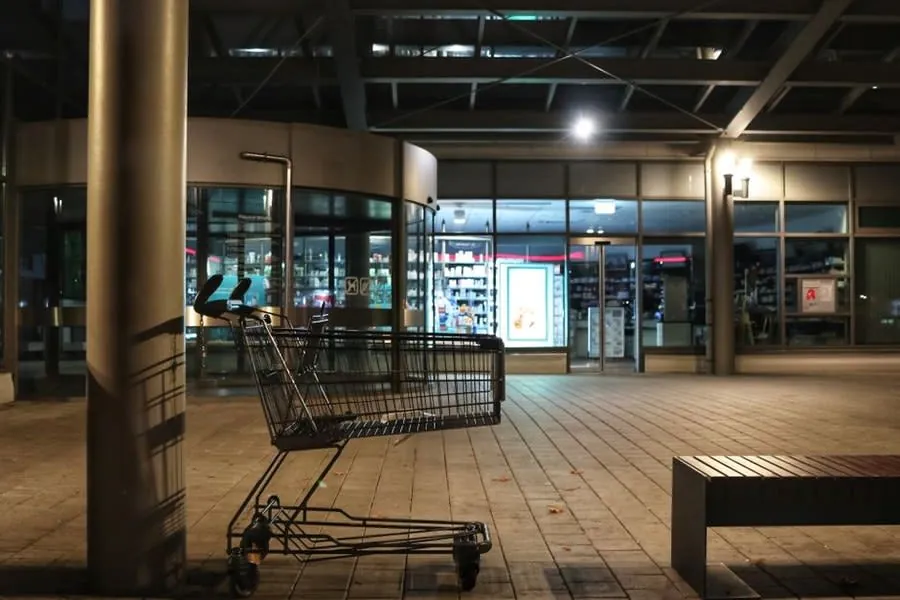
Shops, cafés, salons and anything customer-facing usually have hours when the building is empty, and those hours are when the disruptive phases should happen. Evenings. Sundays. Early mornings before opening. A shutdown week over Christmas or during a quiet trading period.
For a unit or warehouse it is often the reverse: the building runs during the week and is empty at weekends, so a Saturday is worth two weekdays. For anything on the seafront the trading calendar dominates everything, and a roof that would be a nightmare in August is a straightforward job in February.
The reason to raise this at the first conversation rather than later is that it changes the price and the sequence together. Out-of-hours working is not free, but it is very often cheaper than the trading you would otherwise lose, and that arithmetic is yours to do rather than ours. What matters is having the number in front of you early enough to decide.
Access is the disruption, not the roofing
Ask most business owners what they expect to be disruptive and they say noise. In practice it is almost always access.
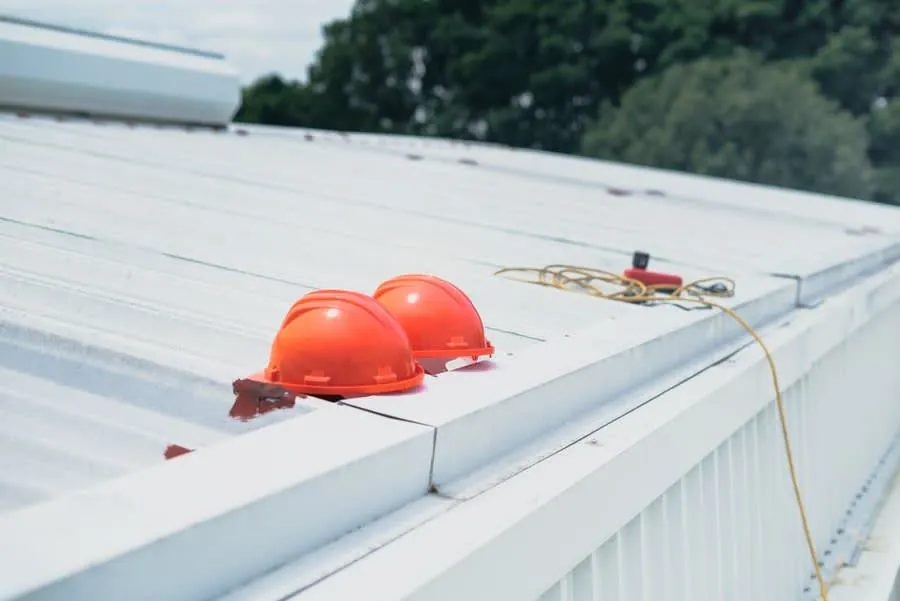
Any work at height above premises still in use means barriers at the roof edge, a cordoned area at ground level, and frequently a scaffold or mast climber to move materials up. All of that has to go somewhere, and where it goes determines which doors stay usable, how deliveries arrive, where customers park and whether a fire exit is affected. The duty to plan it properly is not optional either, and the Work at Height Regulations set out what a contractor is expected to have thought through before anyone leaves the ground.
That last one is not negotiable and it is worth being blunt about. A fire exit has to remain a fire exit for the entire duration of the works. If scaffolding compromises one, the alternative route has to be agreed and signed before anybody starts, not improvised on the second morning. Your obligations as the responsible person for the premises do not pause because there are roofers on site, and the government’s guidance on workplace fire safety sets out where those sit.
The safety side is regulated for good reason. Falls from height and falls through fragile roof surfaces remain among the most common causes of serious injury in construction, which is why HSE guidance on roof work is worth a glance even as a client. A contractor who treats access as a line to be trimmed to win a job is trimming the wrong line.
Get the survey done properly, including a core
On a domestic roof you can learn most of what you need by lifting a corner. On a large commercial roof, guessing is expensive in both directions.

Taking a core sample means cutting a small plug through the full build-up and reading it like a slice of cake: covering, insulation, vapour layer, deck. It tells you what is up there, how many layers previous owners added, and critically whether the insulation is wet.
That last point decides the single biggest question on the job. If the existing build-up is dry and the structure can carry the load, overlaying is often the right answer and it saves a great deal of money and disruption. If the insulation is saturated, an overlay traps that water permanently and you have bought a very expensive postponement. There is no way to tell from the surface, and anybody willing to price it either way without checking is guessing with your money.
A proper survey should also establish the fixing pattern the new roof needs, which on a large roof is not uniform. Uplift is worst at the perimeter and worst of all at the corners, so a sensible specification fixes densely at the edges and standard through the middle. That matters here more than in most places: the prevailing south-westerly reaches the industrial ground around Weston and Locking across open country, and out on the old airfield land there is not much in the way of it at all.
Sort out who is paying before anyone climbs anything
A large share of commercial roof jobs stall not on technical grounds but on the question of who is responsible for the bill.
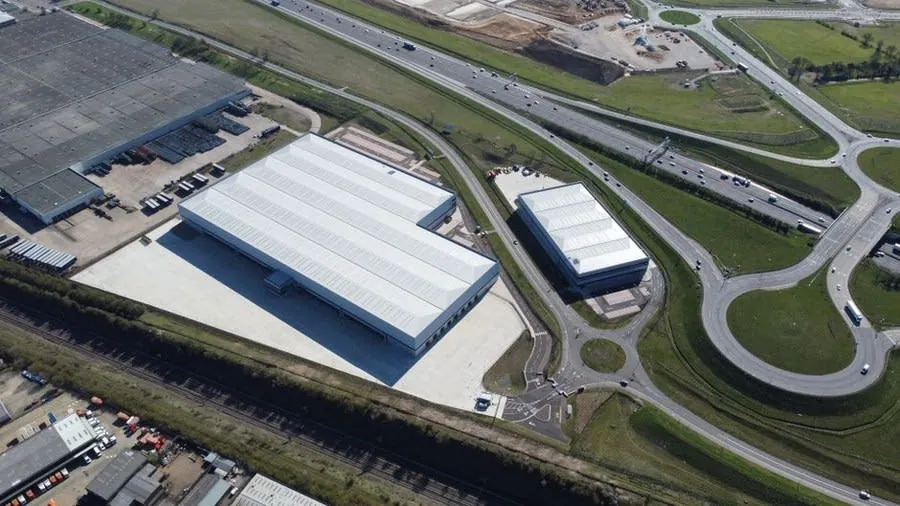
If you lease the building, whether the roof falls to you or the landlord usually turns on how the lease treats repair against improvement, and on whether the work counts as making good or as an upgrade. We are not going to pretend to read your lease for you. What we can do is set out the quote and the condition report so that the distinction is visible, split into what restores the building and what improves it, which is exactly the split a service charge discussion turns on.
It is also frequently easier for us to talk to a managing agent directly. Most of the delay in these jobs comes from information passing through three parties, each summarising it slightly differently, and taking one link out of that chain tends to save more time than anything happening on the roof.
Worth knowing on the regulatory side: replace enough of the covering and the insulation requirement applies to commercial buildings much as it does to houses. Which authority you deal with depends on where you are, and the boundary catches people out. Weston, Worle and Locking are North Somerset Council. Highbridge, Burnham-on-Sea and Bridgwater fall under Somerset Council instead, which has operated as a single unitary authority since April 2023.
Plan maintenance, and stop paying for emergencies
The cheapest commercial roofing money anybody spends is on a roof that has not failed yet.
One visit a year to clear the drainage, run an eye over joints and flashings and photograph anything starting to move will catch most faults while the fix still costs a few hundred pounds rather than several thousand. Blocked outlets in particular are the classic commercial failure: a large roof gathers a lot of debris, and once the water has nowhere to go, a roof designed to shed it becomes a shallow tank with your stock underneath.
Nearly every major failure we attend was visible and inexpensive eighteen months earlier. The reason it was not caught is almost never negligence. It is that nobody goes up there, because there is no reason to until there is water on the floor.
There is a paperwork benefit too. A dated record of inspections and photographs is exactly what an insurer wants when a genuine storm event does cause damage, and it is the difference between a claim that proceeds and one that gets reclassified as wear and tear. Our flat roof repairs page covers what that distinction looks like in practice.
What a well-run commercial job actually looks like
Pulling it together, the shape of a job that does not hurt your business is fairly consistent.
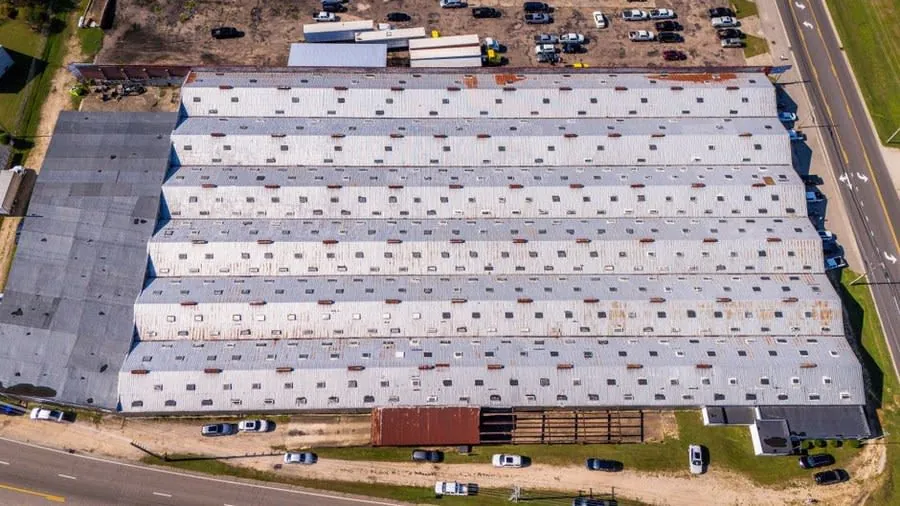
Somebody surveys the roof properly, takes a core, and tells you what is up there before quoting. Roofing and access are priced apart and the work is broken into phases, which lets you spread the cost over more than one budget year where that helps. The programme is built around your trading rather than the contractor’s convenience. Nothing is opened that cannot be closed the same day. Fire exits and access routes are agreed in writing before the first delivery arrives. And when it is finished you get photographs of each phase, which matter more than usual on a roof you will never look at.
None of that is exotic. It is just planning, and it is the part that separates a commercial roofer from a domestic one working above their weight.
If you have a unit, shop or workshop roof in Weston, Highbridge, Bridgwater or anywhere across North Somerset that needs looking at, get in touch and we will come and survey it - including out of hours, if that is the only time your building is quiet.
Frequently Asked Questions
Can a commercial flat roof be replaced while we stay open?
Almost always, yes. The roof gets divided into sections and no more is opened in a day than can be made watertight before the crew leaves. On retail and hospitality premises the noisy phases are usually moved to evenings, Sundays or a shutdown week. It needs to be planned in from the quote stage rather than bolted on afterwards, because it changes how the job is sequenced.
Who pays for a commercial roof replacement, the landlord or the tenant?
That depends entirely on your lease, and specifically on whether the work counts as repair or improvement. We cannot interpret a lease for you, but we can supply a quote and condition report broken down so that distinction is visible, and deal directly with a managing agent if you would rather not sit in the middle of it.
How disruptive is a commercial re-roof?
Less than most people fear, and the disruption is rarely the roofing itself. It is access - where the scaffold or edge protection goes, which doors stay usable, and whether a fire exit is affected. Sorting that at survey is what keeps the job quiet. Noise is intermittent and concentrated in the stripping phase.
Do you need to strip the old roof, or can you overlay it?
It depends on whether the existing build-up is dry and whether the structure can carry the extra load. Both need checking rather than assuming, which usually means taking a core sample. Overlaying a saturated roof seals the water in and buys you an expensive delay, but where the build-up is sound it saves real money and real disruption.
Free Flat Roof Survey
Somebody comes out, walks the roof and tells you what is wrong before mentioning a price. Anywhere across Weston-super-Mare and North Somerset.