
31 August 2026
Do Flat Roofs Always Leak? Where The Bad Reputation Came From, And Why It No Longer Fits
Flat roofs earned their leaky reputation honestly in the 1960s and 70s. Here is what actually failed, what changed, and what it means for a Weston-super-Mare home.
Say “flat roof” to anyone over fifty and watch their face. Somewhere behind the wince is a memory - a bucket on the landing of a 1970s extension, a brown stain spreading across a polystyrene ceiling tile, a school classroom that smelled permanently of damp.
The reputation is real and it was earned. For roughly thirty years Britain built flat roofs that failed, in enormous numbers, and an entire generation drew the reasonable conclusion that the idea itself was flawed. That conclusion has outlived the roofs it was based on by several decades, and it still shapes how people in Weston think when an extension, a garage or a dormer needs a roof today.
It deserves a proper answer rather than a sales line. So: where the reputation came from, what was actually failing, and what changed.

A reputation built between 1950 and 1980
Flat roofs were not new in the postwar years - they had topped buildings for centuries in drier climates. What was new was the scale. Britain needed millions of homes, schools and public buildings quickly, flat roofs were cheaper and faster than pitched ones, and modernist fashion approved of them. So they went up everywhere, on everything, at pace and at the lowest price the contract allowed.
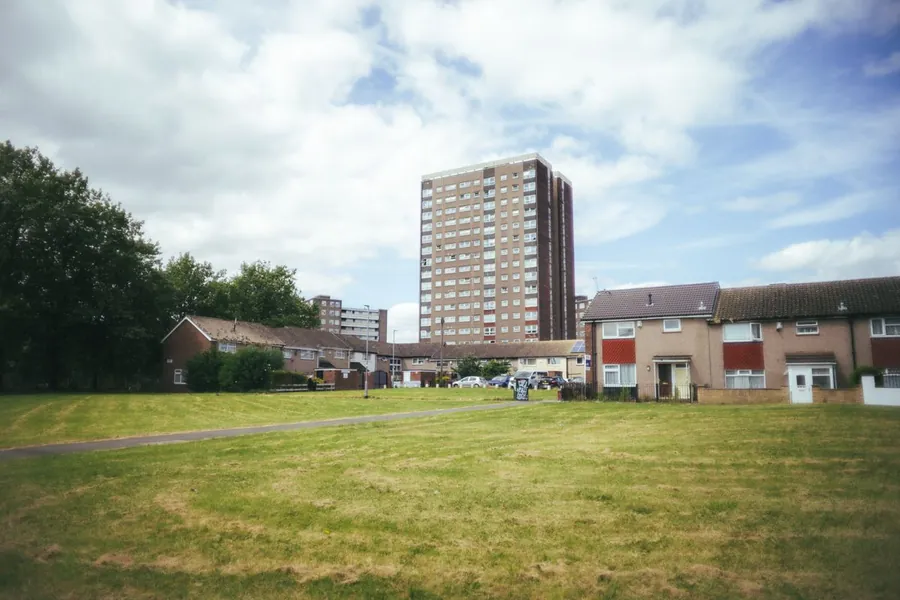
Weston got its share. The town grew hard in those decades, and the flat roof arrived on council housing, on school blocks, on shop parades, and above all on the great wave of domestic add-ons - garages, kitchen extensions, porches and dormers stuck onto Victorian terraces and interwar semis alike. If you own a house in Weston with any addition built between 1950 and 1985, the odds are good it was born with a felt flat roof.
Most of those roofs failed on schedule. When one starts dripping today, a repair visit sorts the symptom - but the interesting question is why the failures were so universal, because the answer is not “because the roof was flat”.
What actually failed, item by item
Take one of those roofs apart - we still strip them regularly - and the failure was never a single mistake. It was a stack of them.
The covering was oxidised-bitumen felt on a rag or paper base, a material with a hard ceiling on its life. Sunlight made it brittle within a decade; the roof’s daily expansion and contraction then cracked it like old paint. Fifteen years was a good result.
The falls were minimal or absent. Water stood in pools, found every crack the sun had opened, and sat there working on it. Standing water also doubled the load on joints that were already the weak point of a lapped material.

Underneath, the construction was a cold deck - insulation, if any, down at ceiling level, leaving the deck cold and the void under it dependent on ventilation that was rarely provided. Warm moist air from the kitchen below condensed on the underside of the deck, and the chipboard so often used for those decks drank it up. Plenty of “leaking” flat roofs were actually rotting from the inside, rain never involved.
And the details - the edges, the upstands against walls, the outlets - were built to the price of the era, which is to say barely. A covering only as good as its weakest lap, over a wet deck, in a puddle. The wonder is that any of them lasted.
What changed: the materials
The materials on a modern flat roof share a name and nothing else with 1970s felt.
EPDM - the rubber membrane - goes down as a single factory-made sheet, frequently covering a whole domestic roof with no joints at all. It stretches over 300 per cent before it tears, ultraviolet light barely ages it, and manufacturers rate it for 50 years. Torch-on felt survived by reinventing itself: modern systems are built on polyester cores with polymer-modified bitumen that stays flexible for decades rather than embrittling in one. GRP fibreglass cures into a single rigid waterproof skin with no joints to fail. The trade bodies that oversee this corner of the industry - the Liquid Roofing and Waterproofing Association among them - certify systems now that the roofers of 1975 would not recognise as the same trade.
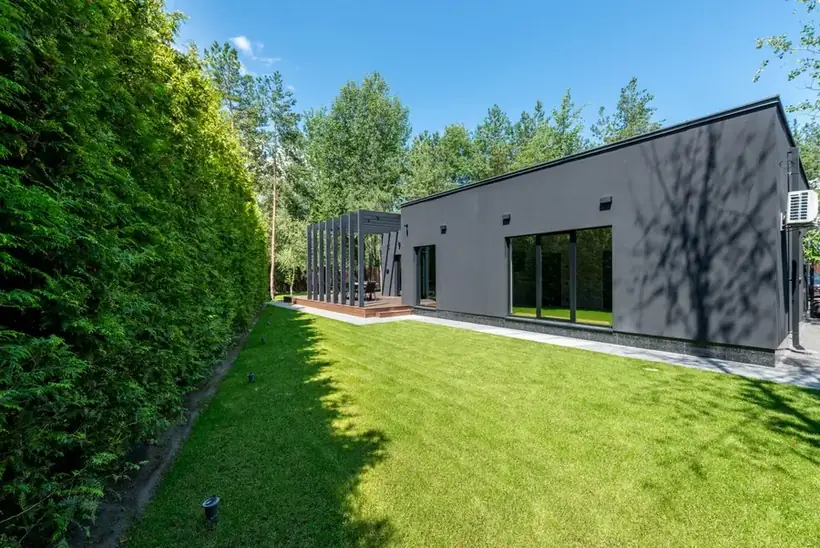
It is telling that architects never abandoned the flat roof. The self-build and high-end housing that fills the design magazines is overwhelmingly flat-roofed, which would be a strange choice if the form guaranteed leaks. The materials caught up with the idea.
What changed: the design rules
The quieter revolution was in the rules underneath the covering, and it matters more.
Falls are now designed, not hoped for - the standard calls for a finished fall sufficient to actually clear water, designed at twice the minimum so that construction tolerance cannot flatten it into a pond. Cold decks have effectively been designed out of new work: current guidance and building regulations push hard towards the warm deck, where insulation sits above the structure and the condensation mechanism that rotted a generation of chipboard simply cannot occur. We covered warm and cold roof construction properly in an earlier post; the short version is that the worst thing about old flat roofs was never visible from above.
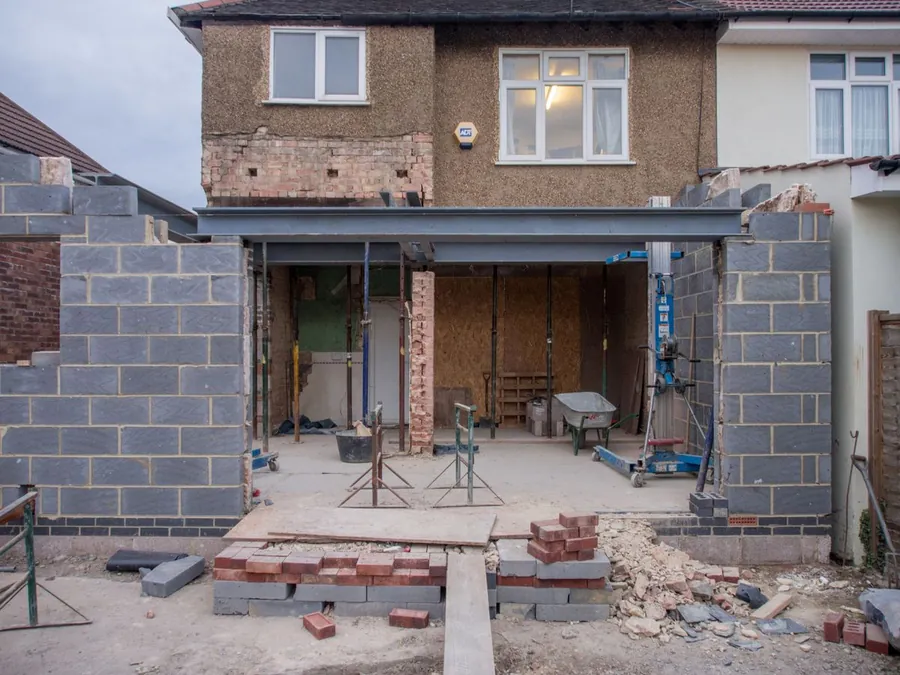
Decks are OSB3 or ply rather than chipboard. Edge trims, outlets and upstand heights are specified components rather than improvisation. None of this is exotic - it is simply what competent practice now looks like, and it is the reason a 2020s extension roof and a 1970s one are different objects that happen to share a shape.
The Weston weather test
It would be convenient to claim Weston is brutal on flat roofs, but honesty does better. By national standards this is not a wet town - the Met Office’s climate averages put the UK as a whole at over a metre of rain a year, and the Somerset coast comes in comfortably under that. Cumbria this is not.
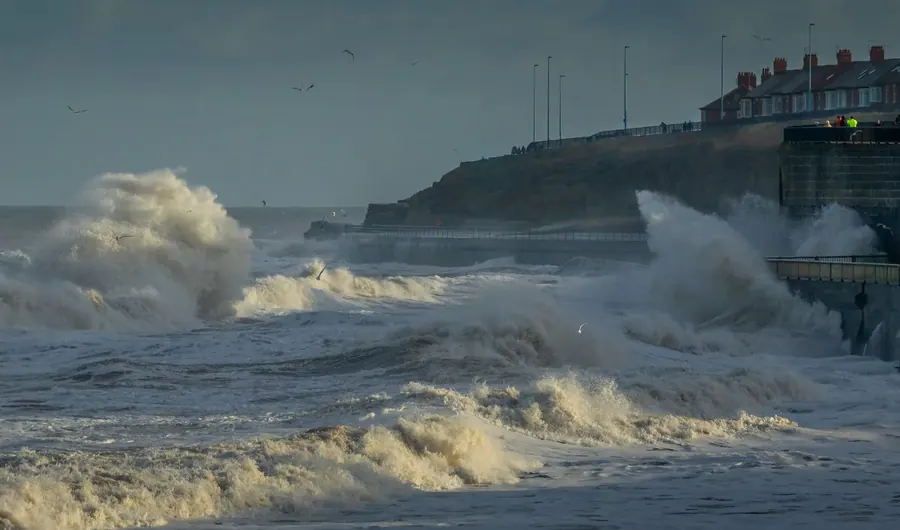
What Weston does have is wind, salt and horizontal delivery. Storms come up the Bristol Channel with little to slow them, and rain arriving sideways tests edge details and upstands in a way gentle vertical drizzle never does. Salt air ages cheap metal trims and fixings faster here than inland. In other words, the local weather does not attack the flat part of a flat roof - modern membranes are indifferent to sitting water anyway - it attacks the perimeter, which is exactly where the quality of the installer shows. The town is a fair test of workmanship and an easy test of materials.
So flat versus pitched, honestly
A pitched roof still holds real advantages: the covering lasts longer than anything laid flat, the loft is useful, and gravity does most of the waterproofing. Nobody should strip a sound pitched roof to make it flat.
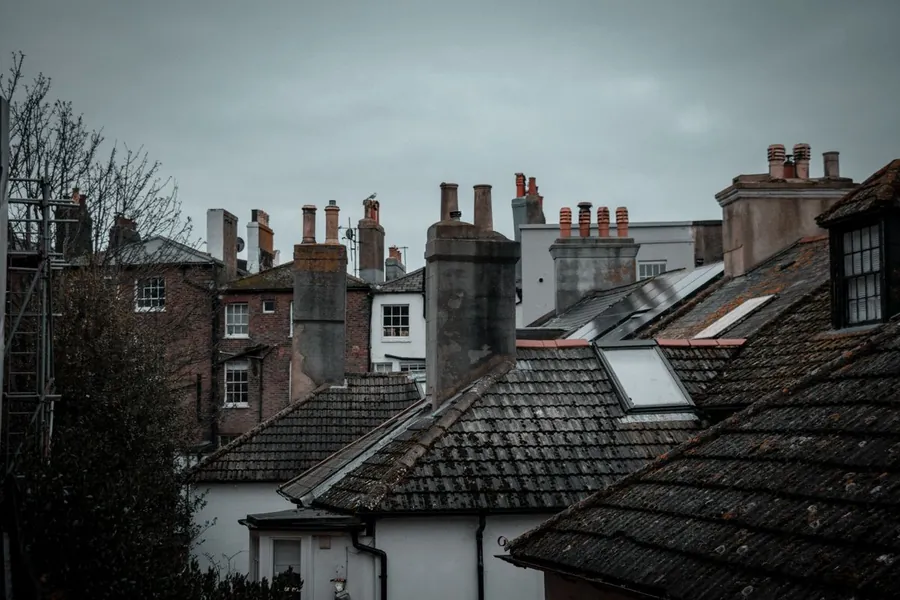
But for the buildings Weston actually adds - rear extensions under first-floor windows, garages, porches, dormers, balconies - the flat roof is usually the only geometry that fits, and sometimes the reason the project works at all: a flat roof tucks under an upstairs sill where a pitched one cannot, and it can carry a lantern, a terrace or a green roof besides. The relevant comparison is not flat versus pitched. It is a modern flat roof versus the 1970s memory of one, and those two have almost nothing in common.
How to make sure yours is one of the good ones
The reputation survives on one true thing: a flat roof punishes bad workmanship faster than a pitched roof does. The slope of a pitched roof forgives a clumsy detail; a flat roof takes it personally. So the variable that matters is the installer.
Look for a roofer who talks about falls, deck condition and upstand heights before they talk about the covering brand. Ask what construction the roof will be - if the answer to “warm or cold deck?” is a blank look, keep dialling. Check membership of a recognised body such as the National Federation of Roofing Contractors, and get the guarantee in writing with the spec on it.
Do that, and the bucket on the landing stays where it belongs - in the 1970s. If you want a straight opinion on an ageing flat roof, or a price for doing the next one properly, talk to us - we look at them every day across Weston-super-Mare and North Somerset.
Frequently Asked Questions
Do modern flat roofs still leak?
Not if they are designed and installed properly, which is the honest caveat in the sentence. A modern flat roof built as a warm deck, with real falls to a real outlet and a membrane like EPDM or a reinforced torch-on system, is as watertight as any pitched roof and stays that way for decades. The flat roofs that leak today are either old systems reaching the end of a life that was always going to be short, or new work done badly. The geometry is not the problem and never really was.
Why did old felt flat roofs fail so quickly?
The felt itself was the weakest link. Older roofing felt was built on rag or paper fibre soaked in oxidised bitumen, and it went brittle in sunlight within a decade, cracking as the roof expanded and contracted. Put that short-lived material over minimal falls, on a cold uninsulated deck prone to condensation, detailed with the cheapest possible edges, and every part of the system was working against the covering. Ten to fifteen years was a typical life, and plenty did not see ten.
How long should a flat roof last now?
A single-sheet EPDM rubber roof is generally expected to last 40 years and often more. GRP fibreglass and good modern torch-on systems sit in the 25 to 30 year range on a sound base. Those figures assume a warm deck construction, correct falls and competent detailing at the edges and junctions - the design half of the job matters as much as the sheet itself. On those terms a flat roof now outlasts the felt roofs of the 1970s three or four times over.
Is a flat roof a problem when selling a house in Weston-super-Mare?
Less than sellers fear. Surveyors flag flat roofs as a matter of routine because they cannot see under the covering, and older lenders' instructions were written when felt failures were common - so the wording on a survey can read gloomily. What actually reassures a buyer is evidence: the age of the covering, who installed it, and any guarantee that transfers. A recent EPDM or GRP roof with paperwork is a selling point, not a defect. An elderly felt roof with no history is priced into offers, which is usually a stronger argument for replacing it than the drips are.
Free Flat Roof Survey
Somebody comes out, walks the roof and tells you what is wrong before mentioning a price. Anywhere across Weston-super-Mare and North Somerset.