
5 September 2026
Flat Roof Coatings In Weston-super-Mare: When A Liquid Overlay Is Worth Paying For
Liquid roof coatings are sold hard in Weston-super-Mare. Here is where they genuinely work, where they fail within a winter, and what a proper job should cost.
Somebody will knock on your door in Weston-super-Mare this year and offer to coat your flat roof. It happens every spring, usually to bungalows and to houses with a garage that has visibly seen better days. The pitch is quick, the price sounds gentle against a replacement, and the work can be done in a day or two with no scaffolding and no skip on the drive. Sometimes it is exactly the right thing to spend money on. Often it is the most expensive way of putting off a job by two winters.
Liquid coatings are a legitimate part of flat roofing. They are used on hospitals, schools and listed buildings where stripping a roof would be disruptive or impossible. The question is never whether the product works. It is whether your particular roof, in its particular condition, is a roof a coating can save - and that is a judgement about what is underneath, not about what the surface looks like.
What is actually being sold at the door
The words vary. Roof restoration, seamless membrane, rubberised overlay, protective system. Underneath the vocabulary sits one idea. The old covering stays where it is, a liquid goes over the top of it, and it cures into a continuous waterproof skin that buys years on a roof heading for replacement.
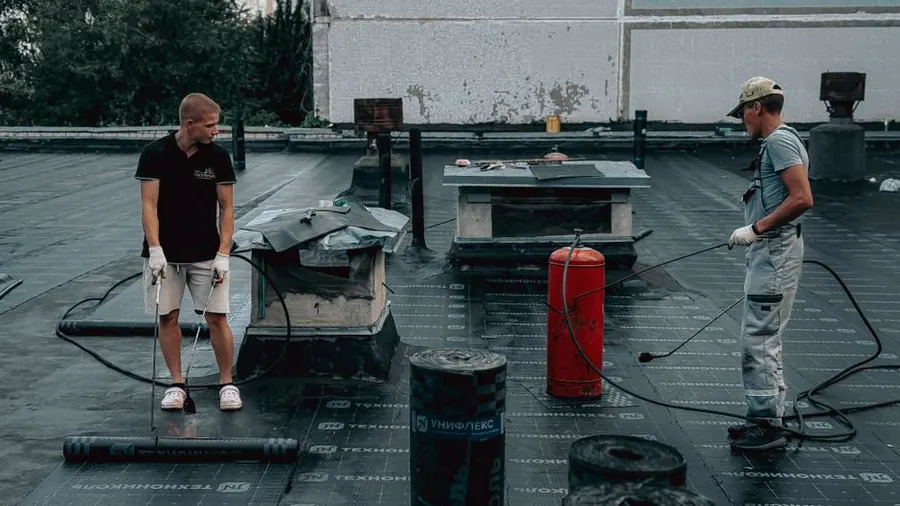
Where door-to-door versions go wrong is the diagnosis, which usually takes about four minutes from ground level. Nobody has lifted a corner, nobody has checked whether the deck flexes underfoot, nobody has looked in the room below. A roof that needs proper flat roof repairs and a roof that needs a coating look identical from a driveway, and the difference between them is worth about a thousand pounds to you.
There is one practical protection worth knowing. When you sign a contract in your own home rather than at a business premises, the Consumer Contracts Regulations give you fourteen days to cancel, and the seller has to tell you so in writing. If nobody mentions it and there is pressure to decide today, that is not a coincidence. The Consumer Contracts (Information, Cancellation and Additional Charges) Regulations 2013 set out how off-premises sales are meant to work.
What a coating is, and what it cannot be
A liquid system is a waterproofing layer, nothing more. Most are polyurethane or acrylic based, brushed or rolled on in two coats with a fleece or polyester reinforcement bedded into the wet first coat at joints, upstands and around outlets. It cures into one continuous piece with no laps, which is genuinely useful on a roof full of awkward details.
What it is not is structure, insulation or drainage. It cannot stiffen a deck that has softened. It cannot add a fall to a roof that was laid level. It cannot dry out insulation that has taken water in, and it will not make a badly fixed edge any more likely to stay down in a gale. Every one of those faults sits below the surface, and the coating goes on top of it.
Thickness is where the specification lives. Reinforced systems are applied by weight, typically somewhere between 1.5 and 2.5 kg per square metre depending on the product, and a coating applied thin is a coating that fails early while looking perfect on day one. The Liquid Roofing and Waterproofing Association publishes guidance on how these systems are meant to be specified and installed, which is a useful sanity check against a quote written on the back of a leaflet.
The roofs where a coating earns its money
There is a real category of roof here, and it is bigger than sceptics admit.
The best candidate is a roof that is ageing rather than failing. The felt or fibreglass is intact and dry, the deck is firm, water clears within a couple of hours of rain, and the problems are surface ones: crazing, loss of mineral finish, a couple of tired laps. Coating that roof at the right moment buys ten years or more for around half the cost of replacing it, and there is no waste to pay to dispose of.
Coatings also earn their place where stripping the roof would be disruptive or close to impossible. Shop parades along Weston’s older streets often have a single flat roof running across several units with plant, pipework and vents through it, and taking that off means exposing occupied premises. The same applies to a roof abutting a listed frontage, or one that can only be reached across a neighbour’s yard. Where the alternative is a fortnight of disruption, a good coating on a sound deck is the sensible engineering answer rather than the cheap one.
The roofs where it is money poured away
Four conditions rule a coating out, and none of them are visible from the ground.
The first is a wet build-up. If water has got into the insulation or the deck, sealing the top means the moisture has nowhere to go, and the first hot afternoon turns it to vapour that lifts the new coating into blisters. The second is a soft or rotten deck. Boards that move underfoot are a structural repair, and paint does not fix structure. The third is ponding: if water still sits on the roof days after rain, whatever caused that has not changed, and a coating simply becomes the new surface for the pond to sit on. Our guide to what a flat roof really costs here covers why the money in these jobs so often sits below the covering rather than in it.
The fourth is a covering already coming apart. Felt that has blistered, split along its laps or lost its bond to the deck is not a substrate any manufacturer will warrant. A coating needs something sound to grip. Applied to a covering that is letting go, it does exactly what the layer beneath it does, only later and with your money on it.
What Weston’s position adds to the decision
Local conditions do not change the principle, but they do change the odds.
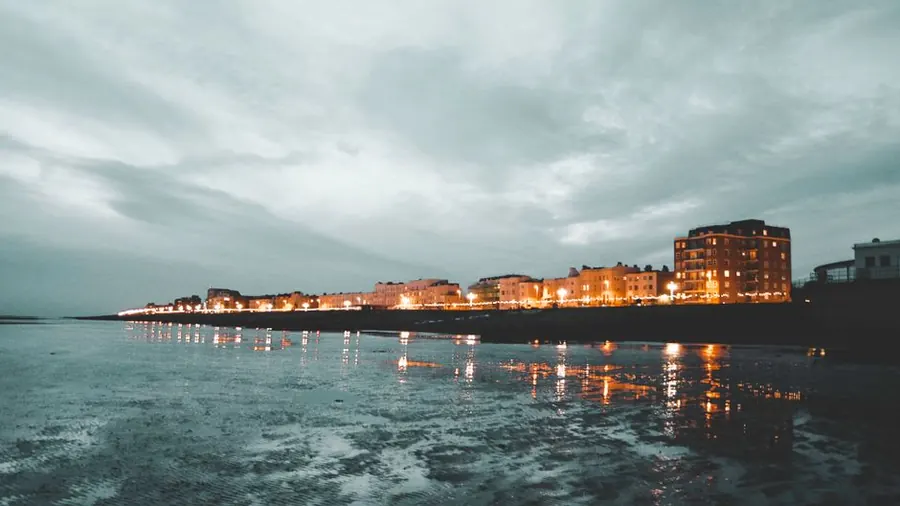
Wind is the first factor. The town faces open water up the Bristol Channel, and flat roofs here are lifted at their edges far more often than they are worn out in the middle. A coating adds no fixings and no mechanical restraint at the perimeter, so it inherits whatever the previous roofer left there. On an exposed roof at Uphill or along the seafront, the edge detail deserves more attention than the surface, and a coating quote that says nothing about trims and upstands has skipped the part that matters.
Salt is the second. Airborne salt does not eat a cured coating, but it works steadily on the fixings, aluminium trims and any exposed metalwork, and those are the points a coating is bonded to. Where a trim is already corroding, coating over it locks a failing component into your new waterproof layer.
Then there is the drying weather. Every liquid system has minimum application temperatures and a moisture limit for the substrate, and a coastal roof in October rarely offers either. Work rushed into a damp autumn window is the single most common reason a coating that should have lasted fifteen years is peeling by March.
What a proper coating job includes, and what it costs
A price is only comparable when you know what sits behind it.

Proper work starts with a survey that includes a moisture check and a look at the deck, not just the surface. Then a full clean down, usually pressure washing followed by drying time, cutting out blisters and making good, priming according to the substrate, reinforcement bedded at every joint, upstand and outlet, and two coats applied at the specified rate with the quantities used recorded.
Budget roughly £45 to £75 per square metre fitted, which puts a single garage roof at about £700 to £1,100 against £900 to £1,700 for a strip and re-cover. That gap is real but it is smaller than the doorstep version suggests, and it closes fast once repairs and extra preparation are added. A quote at half the replacement price with no mention of preparation is not a bargain, it is a different job.
Reading the guarantee before you sign
Long guarantees are the main selling point of coatings, which makes them the part worth slowing down over.
Ask which promise comes from where. A manufacturer’s warranty covers the material, is conditional on correct application, and often requires the installer to be trained and registered with them. A workmanship guarantee comes from the contractor and lasts exactly as long as that contractor does. An insurance backed guarantee is underwritten by a third party and survives the firm folding, which is the only version that means much over twenty years.
Then ask about the product itself. Systems assessed by the British Board of Agrément carry a certificate that states a durability assessment, and that certificate is a stronger reference than any number printed on a brochure. Ask for the certificate number and read what it says about the substrates the system is approved for.
Five questions to ask before you agree to anything
Ask these and you will know what you are dealing with. What is the moisture content of the existing build-up, and how was it measured? What happens to the price if the deck turns out to be soft once cleaning starts? What is the coverage rate in kilograms per square metre, and how will you evidence it was met? Which parts of the guarantee are manufacturer, contractor and insurance backed? And what will you do at the perimeter and upstands, in detail?
Any roofer who works with liquid systems regularly will answer all five without hesitating. If the answers are vague, the coating is being sold as a product rather than specified as a repair, and the roof underneath is still whatever it was before the leaflet came through your door.
If you have been quoted for a coating and want a second opinion on whether your roof is a candidate for one, tell us about it and we will come and look properly - including telling you when a coating is the right call and a replacement would be overkill.
Frequently Asked Questions
Is a liquid coating a permanent fix for a leaking flat roof?
Only when the leak is a surface problem on a roof that is otherwise sound. A reinforced liquid system applied over dry, well prepared felt or fibreglass with a decent fall behind it will hold for years. Applied over a covering with water already trapped under it, a rotting deck or standing water that never drains, it hides the fault rather than curing it, and the leak usually reappears in the first proper wet spell.
How much does a flat roof coating cost in Weston-super-Mare?
For a reinforced liquid system on a roof that needs normal preparation, expect somewhere around £45 to £75 per square metre fitted. On a single garage that works out at roughly £700 to £1,100, against £900 to £1,700 for a full strip and re-cover. The gap narrows quickly once repairs, extra primer or a day of cleaning down are added, which is why a coating quote that comes in far below a replacement is worth reading twice.
Can a coating be applied over a wet or damp flat roof?
No. Every liquid system is specified for a dry substrate, and most manufacturers set a moisture limit and a minimum air temperature for application. Sealing a wet build-up traps the water underneath, where it warms in the sun, turns to vapour and pushes the new coating off in blisters. If insulation under the covering has taken water in, no coating on the market will dry it out.
What does a twenty year coating guarantee actually cover?
Usually the material, and only if it was applied at the specified thickness by an installer the manufacturer recognises. Workmanship is a separate promise from the firm that did the job, and it is worth only as much as that firm's ability to still be trading. Ask which parts of the guarantee come from the manufacturer, which from the contractor, whether it is insurance backed, and what evidence of application thickness will be recorded.
Do coatings work on a flat roof near the seafront in Weston?
Yes, provided the exposure is designed for. Salt in the air does not attack the coating itself so much as everything it meets - fixings, trims and the metalwork at the edge. Wind is the bigger factor: a coating adds no mechanical strength at the perimeter, so if the existing covering is poorly fixed at its edges, coating it leaves that weakness exactly where it was.
Free Flat Roof Survey
Somebody comes out, walks the roof and tells you what is wrong before mentioning a price. Anywhere across Weston-super-Mare and North Somerset.