
22 August 2026
Flat Roof Leaking? What To Do In The First Hour
Water coming through a flat roof in Weston-super-Mare? Here is the order to do things in - what to move, what to photograph, what never to try, and what a proper call-out looks like.
Water is coming through the ceiling. There is a noise you have not heard before, a stain that was not there this morning, and a strong urge to do something about it immediately.
That urge is right. What most people do with it is not. The first hour after a flat roof starts leaking gets spent on the roof when it should be spent in the room, and a fair amount of avoidable damage - and the occasional trip to A&E - happens in that window. So here is the order things actually want doing in, from the first ten minutes to the week after, based on the call-outs we get across Weston-super-Mare and North Somerset when the wind swings round to the south-west and the rain arrives sideways.
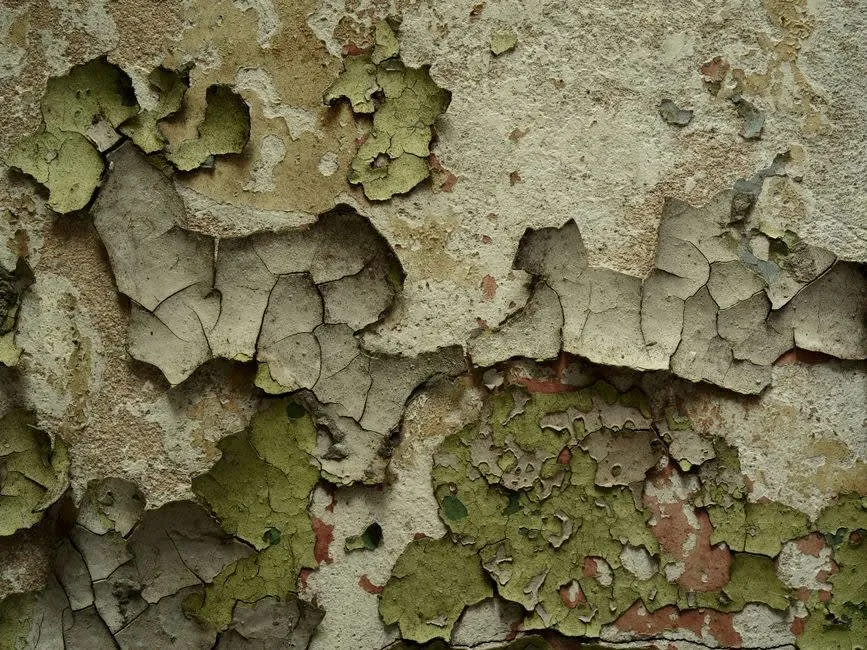
The first ten minutes belong to the room, not the roof
Nothing you can do to the roof in the next hour will help. Everything you can do inside will.

Get anything that matters out from under it. Electronics first, then anything upholstered, then paperwork and photographs, which are the things people come back for and find ruined. Buckets under the drips, towels round the buckets, and if the drip has become a run, a washing-up bowl empties less often than a saucepan.
Then look up, properly. If water is anywhere near a ceiling rose, a downlight or a socket, turn that circuit off at the consumer unit before you carry on tidying. Downlights in particular are just neat round holes cut into the exact surface the water is now sitting on, which is why Electrical Safety First is blunt about keeping away from anything electrical that has been wet. A ceiling that has taken on water is heavy, too. If it is sagging, everybody out of the room, and prick the low point of the bulge from the side with a long screwdriver so it drains into a bucket rather than landing on the carpet in one go.
The drip is almost never underneath the hole
This is the single most useful thing to understand before you start guessing, and it is why the DIY tube of black mastic so rarely works. A pitched roof leaks more or less above where you see it, because gravity has an obvious route to follow. A flat roof does not.
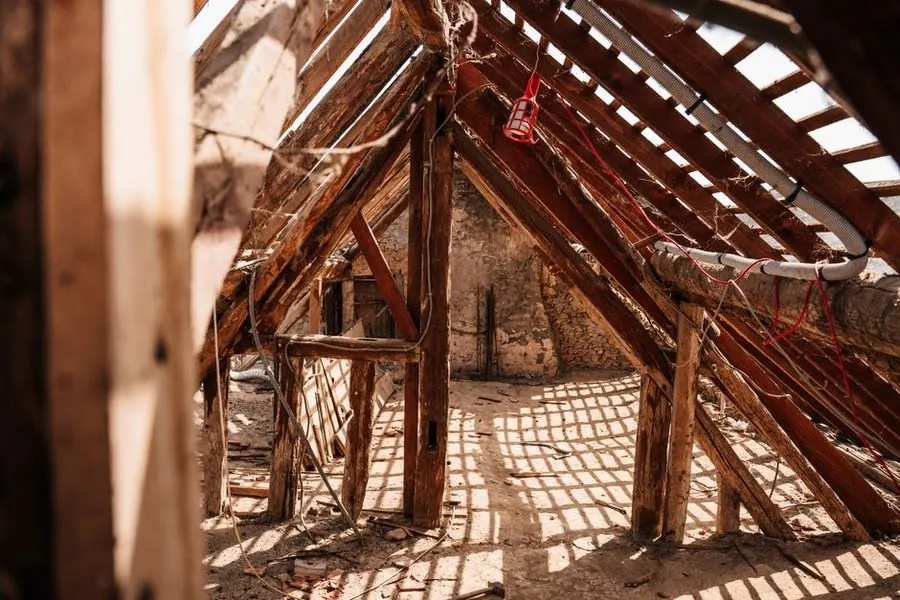
Water that gets through a flat roof covering lands on a deck, then on joists, and joists are laid dead level in the direction the water wants to travel. It runs along the top of a timber until it meets a nail, a wire, a joint or a low spot, then falls. Three or four metres between the entry point and the stain is normal. On the wider extensions round Ashcombe and Bournville we have traced leaks the full width of the room.
So the wet patch tells you where the water gave up, not where it came in. Mastic applied above the stain seals a piece of roof that was never leaking, the homeowner concludes the roof is fine, and the actual fault carries on quietly rotting the deck for another two winters. Finding the entry point means reading the falls, the seams, the upstands and the outlet in the right order, which is the slow part of the job and the part worth paying for.
Please do not get on the roof
Every roofer in North Somerset has the same conversation two or three times a winter, and it always starts with someone saying they only wanted a quick look.

The danger is not the height. Garage roofs are three metres up and people fall through them regularly. The danger is that a roof which has been leaking has wet timber under it, and wet chipboard or OSB decking loses its strength long before it looks any different from above. It holds, it holds, it holds, and then it does not, and there is no warning in between. The Health and Safety Executive’s guidance on work at height exists because this specific accident keeps happening to people who thought they were being careful.
You can learn nearly everything you need from an upstairs window or the top of a ladder at the edge, without transferring your weight onto anything. Standing water, a lifted seam, a split at an upstand, a blocked outlet with a tidemark round it - all of that is visible from the perimeter. If it needs walking on to see, it needs somebody insured with a roof ladder and a crawl board.
Temporary measures that help, and three that make things worse
There is a small amount of genuinely useful first aid, and quite a lot of folk remedy that costs money later.

What helps: clearing the outlet if you can reach it from a ladder at the edge, because a blocked outlet turns a small fault into a swimming pool. Moving a water butt or a wheelie bin out from under a downpipe that is backing up. Opening a window in the affected room, since a sealed room full of wet plaster grows mould in days.
What does not help, in order of how often we see it. Bitumen paint over a wet surface, which will not bond and traps the moisture it was meant to keep out, so the next repair has to grind it all off first. A plastic sheet weighted with bricks, which fills with water, becomes a hundred-kilogram bag hanging off the roof and takes the edge trim with it when the wind gets under it in the night. And spray-on sealant from a tin, which does hold for about a fortnight - long enough for you to stop worrying and stop chasing a proper fix.
Photograph everything before anybody tidies up
Nobody wants to be doing admin while the ceiling is dripping. Do it anyway. Ten minutes with a phone now is worth a great deal later, and it is worth it whether or not you end up making a claim, because the evidence disappears the moment somebody starts mopping.
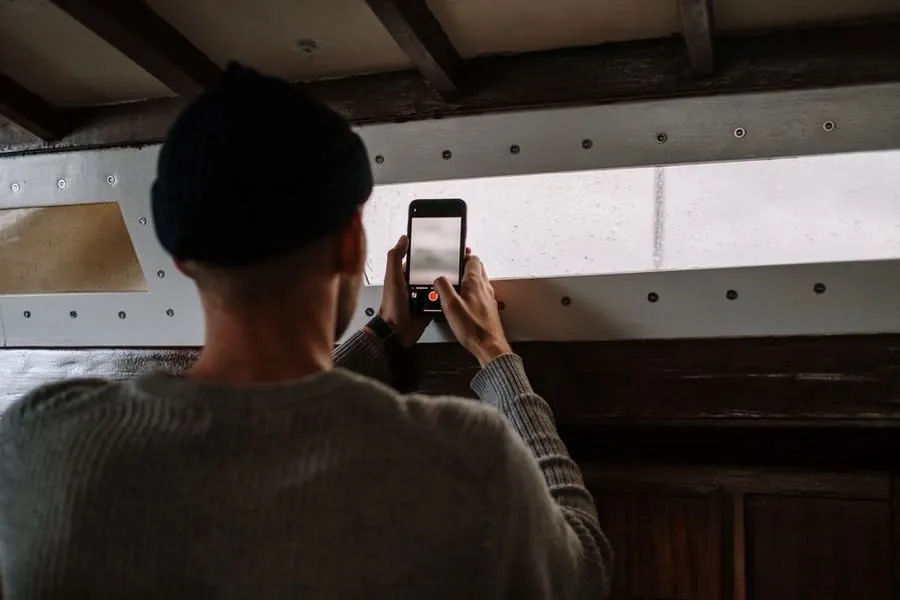
Photograph the stain while it is wet and at its worst. Photograph the buckets, the standing water, the damaged contents individually rather than in one heap, and the roof itself from the window. Note the date and roughly what the weather was doing - if it coincided with a named storm, say so, because that single detail changes how a claim is assessed.
The distinction insurers work to is sudden damage versus gradual deterioration. Storm damage is normally covered. A covering that has been quietly failing since 2011 is not. But the water damage inside is a separate line on the policy from the roof itself, and plenty of people never claim for a ruined ceiling because they assume the exclusion on the roof covers everything. Citizens Advice has a plain-English guide to home insurance claims that is worth five minutes before you ring your insurer. Ask any roofer you call whether they will write a short cause-of-damage note. Most will, and it costs nothing.
What actually happens when somebody turns up
Worth knowing, mostly so you can tell a proper visit from a lucrative one.
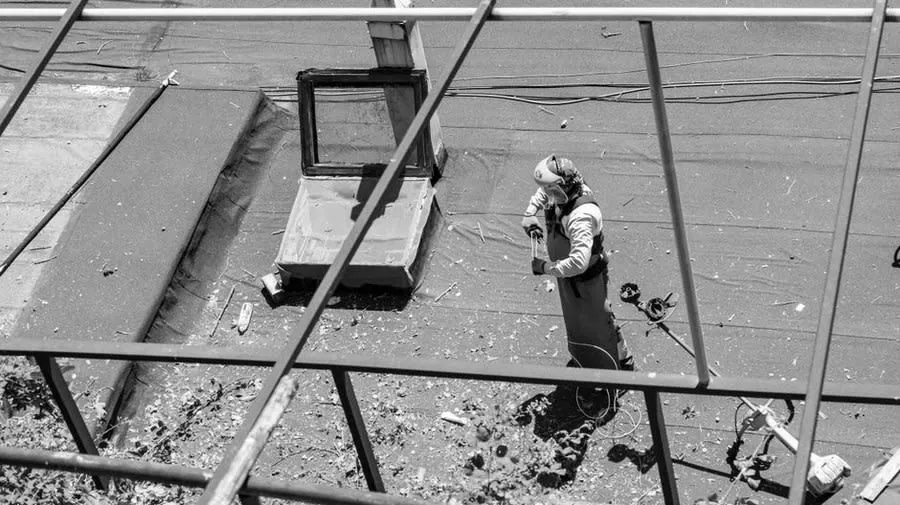
An emergency visit has one objective, and it is not to fix your roof. It is to stop water entering the building tonight. That usually means finding the entry point, drying the area enough for something to stick to it, and making a temporary repair that is honest about being temporary - a patch, a flashband dressing, a properly fixed and battened sheet rather than one held down with bricks.
The person who comes should also be able to tell you what they found and why, in words that make sense. Wet decking felt underfoot, a seam that has lifted along the whole run, an outlet packed solid with moss and gull feathers. Vague answers on a call-out usually turn into vague quotes a week later. If you want the longer list of what separates a decent firm from an expensive one, we have written it up in our guide to choosing a flat roofing company in Weston-super-Mare.
Expect to pay a call-out charge. It is labour outside normal hours on somebody’s worst day, and a firm that offers to do it free is planning to recover it somewhere in the quote.
The patch is not the repair
The temporary fix buys you a dry ceiling and a bit of thinking time. That is all it buys, and the number of roofs we meet where a flashband patch from four winters ago is still doing the job on its own suggests plenty of people forget that once the room dries out.

Once the weather has passed, the deck needs looking at, and that means somebody lifting a small area of covering rather than standing on it and giving an opinion. Sound decking with one failed detail is a genuine repair. Decking that is soft over any real area is a different conversation, because a new covering laid over rotten boards fails from underneath and takes your guarantee with it.
Give it a fortnight of dry weather before you make the big decision, and use the time to get the ceiling dried properly rather than painted over. Damp plaster that gets sealed in comes back through the new emulsion within a season. If the roof turns out to need work rather than a patch, our page on flat roof repairs sets out what we look at and what tends to be salvageable. And if you would rather know the warning signs before the next one, the seven things a flat roof does before it gives up are all visible from the ground.
One last thing worth saying out loud. Leaks in Weston cluster after the first proper rain that follows a dry spell, because the sun has spent weeks opening up seams that nothing has tested since spring. If your roof has form for this, September is a much cheaper month to deal with it than January.
Frequently Asked Questions
My flat roof is leaking - can I get someone out today?
Usually, yes. A same-day visit to a leaking flat roof is mostly about stopping water entering the building, which is a different job from repairing the roof properly. Ring rather than email, say how fast the water is coming through and whether it is anywhere near lights or sockets, and be honest about access. Those three details decide how quickly somebody can be with you and what they need to bring.
Will my insurance pay for a leaking flat roof?
It depends entirely on why it leaked. Sudden damage caused by a storm is normally covered. A covering that has quietly worn out over fifteen years is not, because policies exclude gradual deterioration - and that exclusion is the one flat roofs fall foul of most often. What insurers do frequently pay for is the damage inside: ceilings, plaster, flooring and belongings. It is worth claiming for that even when the roof itself is on you.
Should I put a bucket under the drip or try to stop it?
Bucket, always. Water finding its own way out through one predictable spot is far better than water spreading sideways through a ceiling void looking for another exit. If the ceiling is bulging, the safest thing is to pierce the low point of the bulge with a screwdriver from the side, stand clear, and let it drain into something. A bulge that is left alone can bring a section of plasterboard down all at once.
Is it safe to go up and look at a leaking flat roof myself?
No, and the reason is not the height. A flat roof that has been leaking is a flat roof with wet timber underneath it, and wet timber gives way without warning. Falls through fragile roofs are one of the most common causes of serious injury in construction, and homeowners on garage roofs are not exempt from the physics. Look from an upstairs window instead.
Free Flat Roof Survey
Somebody comes out, walks the roof and tells you what is wrong before mentioning a price. Anywhere across Weston-super-Mare and North Somerset.