
2 September 2026
Flat Roof Repair Or Replacement In Weston-super-Mare: When Patching Stops Paying
How to work out whether your Weston flat roof needs a repair or a full replacement - the tests that decide it, what each costs locally, and the point where patching becomes a waste of money.
Nearly every flat roof enquiry we take in Weston starts the same way: someone has a leak, they have had it before, and they want to know whether to keep mending it or bite the bullet. It is the most expensive question in flat roofing to get wrong in either direction. Replace a roof that had ten good years left and you have thrown away four figures. Patch one that is finished and you pay for the repair, then the ceiling, then the replacement anyway.
There is no universal answer to it. There is a method, though, and it is not the one most homeowners reach for. The instinct is to judge by the size of the leak. A roofer judges by how much of the covering is still doing its job, which is a completely different measurement - and one you can partly take yourself before anybody quotes.
Watch: working out whether a Weston-super-Mare flat roof needs repairing or replacing.
A repair fixes a place, not a roof
Start with what a repair actually is. It treats one location: a split at a corner, a lifted lap, a failed seal round a soil pipe, a section of trim that has come loose. The rest of the covering carries on as it was.

That works brilliantly when the failure is genuinely local - which it very often is. Roofs rarely fail evenly. They fail where something interrupts the flat surface, or where water is made to sit. Our flat roof repairs work is mostly upstands, outlets and junctions rather than open field areas, because that is where the stress is.
What a repair cannot do is add life to material that has aged out. Bitumen hardens and loses its oils. Old felt goes brittle enough to crack when you kneel on it. Once that has happened across the whole roof, mending one crack simply moves the next failure a metre to the left.
The five things a roofer is actually looking at
When someone stands on your roof and gives you an answer in three minutes, this is the checklist running in their head. You can run most of it yourself from a window or a ladder, without going up.
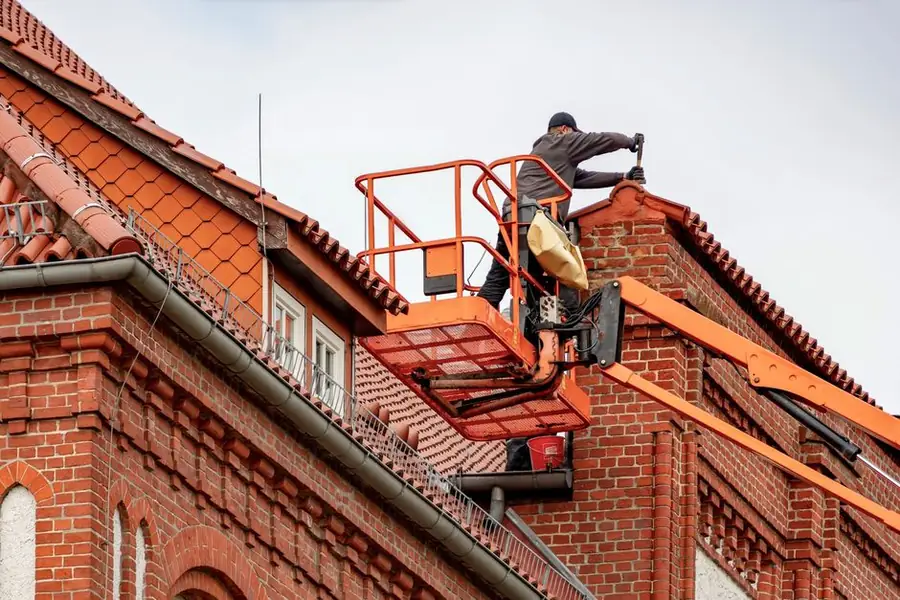
Age against material comes first. Mineral felt from the 1990s is living on borrowed time. Three-layer torch-on felt at fifteen years may have a decade in it. EPDM at fifteen is barely middle-aged. The same symptom means very different things depending on what it is happening to.
Then the count. How many separate problems are there? One is a repair. Two in different places is a conversation. Three is a replacement.
Next, the deck. Press it. A firm deck underfoot with no give means the timber is dry. Sponginess, or a slight dip that takes your weight differently to the rest of the roof, means water has been sitting in there a while and the boards have gone. Nothing can be laid on a rotten deck, so this one finding can settle the whole question on its own.
Where the water sits matters just as much. Puddles still there two days after rain say the falls have failed, usually because the deck has sagged between the joists. A repair does not correct a fall. Only rebuilding the build-up does that.
Last, what is happening inside. A stain that keeps growing after each repair, or mould appearing in a corner that was fine last year, means water is tracking somewhere nobody has found yet.
Reading the ceiling as well as the roof
The inside tells you things the outside will not. On the roof you see the covering. On the ceiling you see the consequences, and how long they have been building.
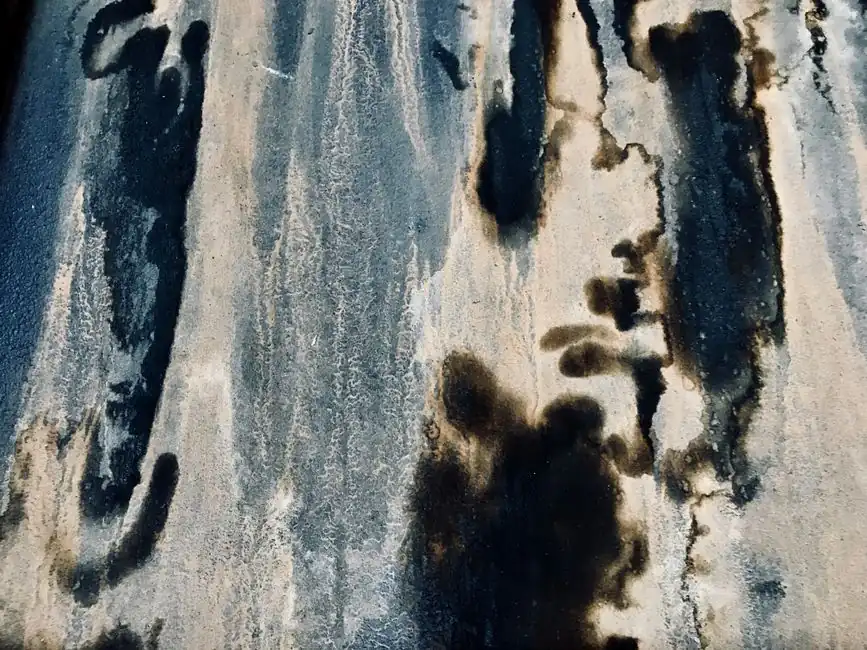
A single sharp-edged brown ring that appeared during one storm and has not moved since is a point failure. Diffuse staining that creeps outward month by month, or several patches that came separately, indicates water spreading through the insulation or along the joists and emerging wherever it can. That second pattern nearly always means replacement, because you are no longer dealing with a hole - you are dealing with a wet build-up that has to come out.
It is also worth ruling out condensation before spending anything, particularly on older Weston extensions with no ventilation gap. We wrote a whole piece on telling condensation and a genuine leak apart, and it is a distinction that has saved several customers here the cost of a roof they did not need.
When a repair is genuinely the right call
Plenty of roofs we look at do not need replacing. That is worth saying out loud, because flat roofing gets discussed as though replacement were the only honest answer, and it is not.
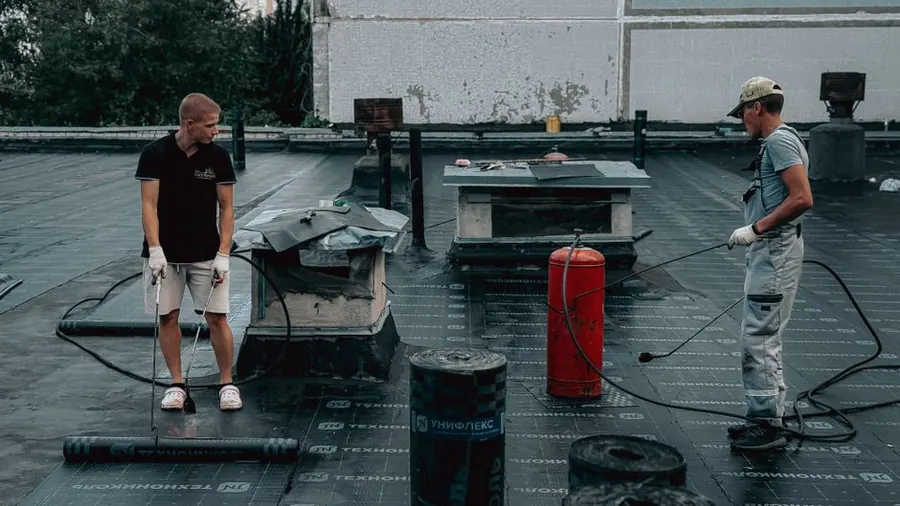
Repair confidently when the covering is under two-thirds of its expected life, the deck is firm, the water is arriving in exactly one place, and that place is a detail rather than open roof. A perished collar around a vent pipe, a lap that has lifted at the seaward edge, a trim that has worked loose in the wind - these are afternoons of work, not projects.
Repair also makes sense as a deliberate stopgap. If you are selling in eighteen months, or the extension is coming off next year anyway, spending £250 to keep it dry is a rational decision rather than a compromise. The mistake is only ever pretending a stopgap is a solution.
When you are paying twice
The other side of the line is easier to describe than most people expect. Once a covering is generally failing, everything you spend on it is rent rather than purchase.
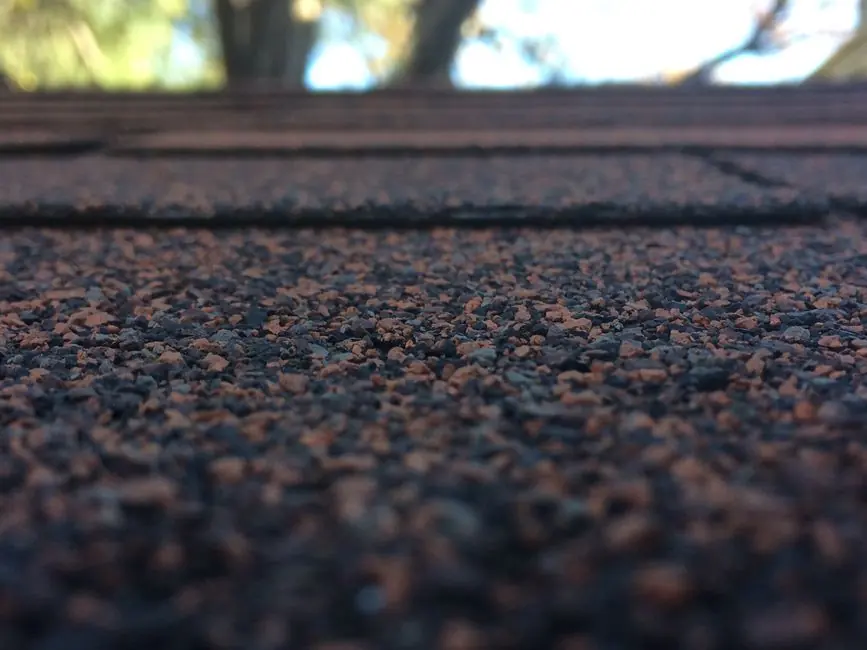
The signs cluster. Crazing across the whole surface rather than one area. Blistering in several places. Laps opening up where the adhesive has given out generally. Aggregate or mineral finish worn through to the black beneath across the middle of the roof. Water standing after every shower because the deck has settled. Any two of those on the same roof, and the covering is done.
The specific trap in this town is the roof that gets patched every autumn as a matter of routine. We have taken over roofs where the running total of repairs across six or seven years comfortably exceeded a new roof - paid in instalments small enough that nobody added them up. If you find yourself budgeting annually for the same roof, you have already chosen replacement without noticing. You have just chosen the expensive version of it.
What each costs around Weston
Numbers make the decision concrete. As a guide from the work we price across Weston, Worle, Uphill and the villages, a localised repair on a domestic flat roof - a split, an upstand, a failed outlet seal - typically runs £180 to £450 depending on access. Multiple repairs in one visit sit between £400 and £900.

A full replacement on a typical rear extension of 15 to 20 square metres generally lands between £2,200 and £4,000 depending on the system, the state of the deck and whether insulation is going in. Our flat roof cost page breaks the figures down further by size and material.
Set those side by side and the arithmetic does itself. Two repairs a year at £300 is £600 annually against a roof that should give you 25 to 30 years. The crossover comes faster than people think - usually inside four years, and sooner once you count the redecorating.
One local wrinkle: access changes repair prices here more than material does. A ground-floor extension in Milton is a ladder job. The same repair on a third-storey flat above a Marine Parade shop needs scaffold or a platform, and that line item alone can double a small repair while barely moving the cost of a replacement. On tall buildings the case for doing the job once and properly is much stronger.
The insulation question that only applies to replacements
There is one factor that quietly favours replacement on any roof over a heated room, and it rarely gets mentioned at quote stage.
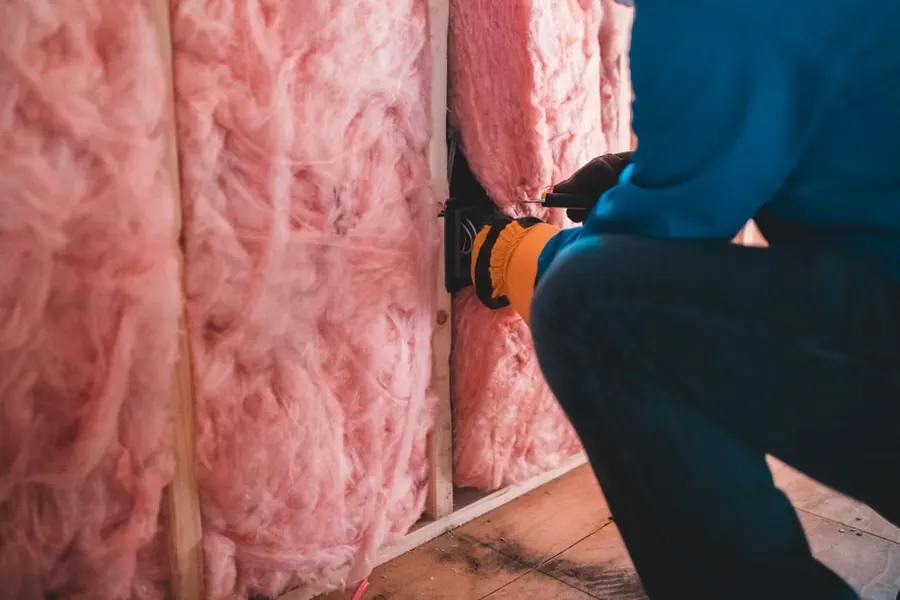
Under the building regulations, renewing more than half the surface area of a roof counts as renovating a thermal element, which brings a requirement to improve its insulation where that is reasonably possible. The relevant guidance sits in the government’s guidance on building regulations approval, and moisture control in the new build-up is covered by Approved Document C on resistance to moisture. LABC’s homeowner guidance is a plain-English starting point if you want to understand what building control will expect.
In practice this means a replacement over a room usually comes back as a warm roof, with insulation above the deck. That adds cost - but it also means an extension that has been freezing in February since it was built stops being freezing. A repair gives you none of that. For a roof already borderline, the insulation upgrade is often what tips the sums, particularly on the older single-storey extensions all over Oldmixon and Bournville that were built with next to nothing above the plasterboard.
Getting an honest answer out of a quote
Because the repair-or-replace call is a judgement rather than a measurement, the way it is presented tells you a lot about who is making it.
Ask for both prices. Any roofer who has genuinely assessed your roof can price a repair and a replacement and explain which they would choose on their own house. Someone who will only quote a replacement without looking at whether a repair would do has decided before arriving. Someone who quotes a cheap patch on an obviously spent roof is buying the job rather than solving the problem.
Ask what happens if the deck is worse than it looks, and get the rate agreed in writing before anyone starts stripping. Ask how long the repair is expected to hold - a straight answer of “two or three winters” is worth far more than a vague reassurance. And ask what guarantee attaches to each option, because a repair on a failing roof usually carries almost none, and that fact alone is often the most honest verdict on its condition you will get.
If your roof has had more than one visit in the last couple of years, it is probably telling you something. Get a free assessment of it and we will give you both numbers and our honest view on which one to spend.
Frequently Asked Questions
Is it cheaper to repair or replace a flat roof?
A repair is always cheaper on the day. Whether it is cheaper over five years depends on how much of the roof is still sound. A single split at an upstand on an otherwise healthy covering is worth mending for a couple of hundred pounds. Three separate leaks on a twenty-year-old felt roof are not, because you will be back for a fourth. The rough test we use is this: if the cost of the repairs you can foresee over the next three years is more than half a replacement, replace it now.
How many times can you patch a flat roof before it needs replacing?
There is no fixed number, but there is a pattern. The first repair on a mature roof usually holds. The second, somewhere else on the same roof, tells you the covering is failing generally rather than locally. By the third you are chasing the water rather than fixing the roof. Once patches start appearing in different areas within a year or two of each other, the covering has gone and further repairs are just delaying the bill.
Can a leaking flat roof be repaired in winter?
Yes, and in Weston we do plenty of winter repairs, but the conditions set limits. Torch-on and self-adhesive systems want a dry, reasonably warm surface, so a soaked roof on a January morning may only take a temporary fix until there is a dry window. Liquid systems have minimum application temperatures too. A competent roofer will tell you honestly whether what they are doing is a permanent repair or a holding measure until spring.
Does replacing a flat roof mean adding insulation?
Usually, yes. Under the building regulations, once you renew more than half the surface area of a roof it counts as renovating a thermal element, and the whole thing is expected to be brought up to the current standard where that is technically and economically feasible. In practice a full replacement on a heated room is quoted as a warm roof with insulation above the deck. A repair, or a recovering of a garage or an unheated outbuilding, does not trigger it.
Will my insurance pay for a flat roof replacement?
Only if a specific insured event caused the damage - a storm, an impact, a fire. Buildings insurance does not cover a covering that has simply worn out, and gradual deterioration is excluded on every policy we have seen. Where it gets blurred is a roof already at the end of its life that then loses material in a gale. Insurers will often pay to make good the storm damage while declining the underlying condition, which is a partial contribution rather than a new roof.
Free Flat Roof Survey
Somebody comes out, walks the roof and tells you what is wrong before mentioning a price. Anywhere across Weston-super-Mare and North Somerset.