
27 September 2026
Single Ply And Liquid Membranes On Weston-super-Mare Commercial Flat Roofs: How They Compare To Felt
Single ply, liquid applied and built-up felt on commercial roofs around Weston-super-Mare. What each one suits, what it costs over its life, and who decides.
Ask about a flat roof on a house around here and the conversation is over in three words. Rubber, fibreglass or felt. Ask about the roof over a 900 square metre unit off Oldmixon Crescent and none of those three is automatically the right answer.
Commercial roofs get different systems because they have different problems. Longer spans, plant bolted to the surface, a business underneath that cannot go dark for a fortnight, and an insurer with firm views about naked flames. The two systems that dominate that world are single ply membrane and liquid applied waterproofing. Built-up felt has not gone anywhere, and on a good number of Weston buildings it is still the sensible answer.
So here is what each of the three actually is, where it wins, and what it costs across a working life rather than on the day the invoice lands.
What is already up there on Weston’s commercial buildings
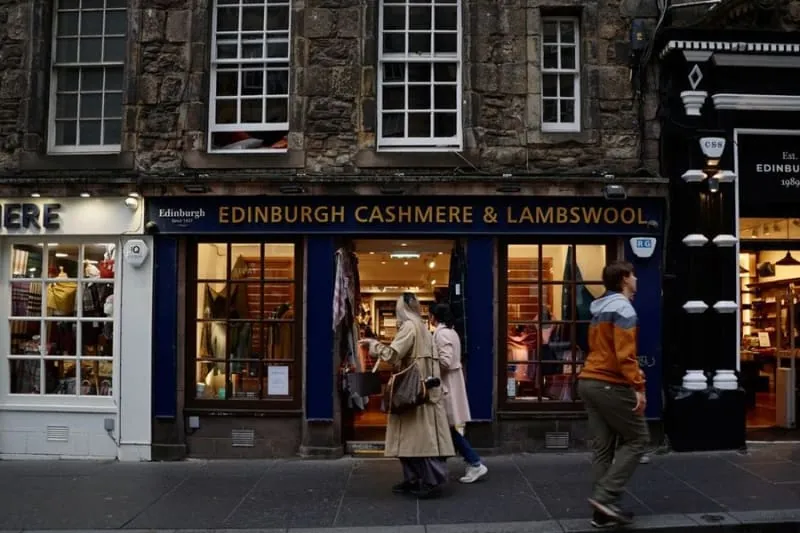
The town’s commercial stock splits into three rough groups, and each one tends to carry a different covering.
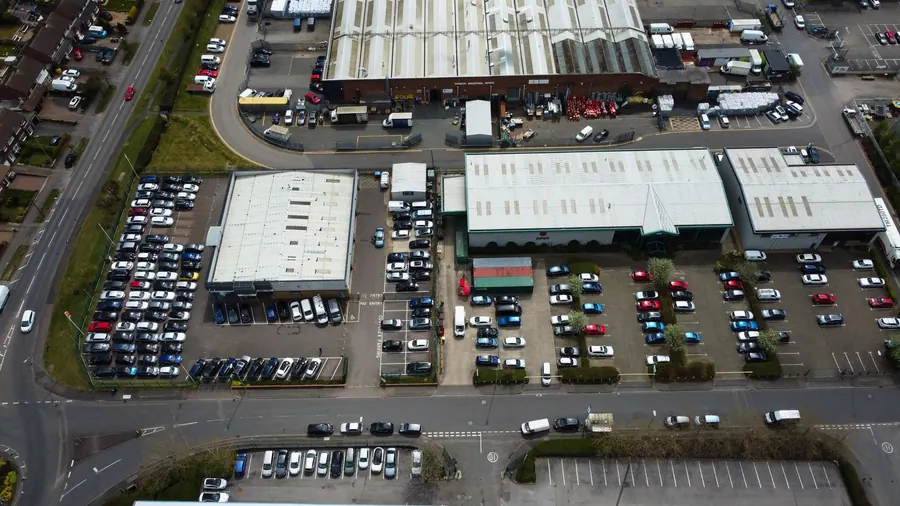
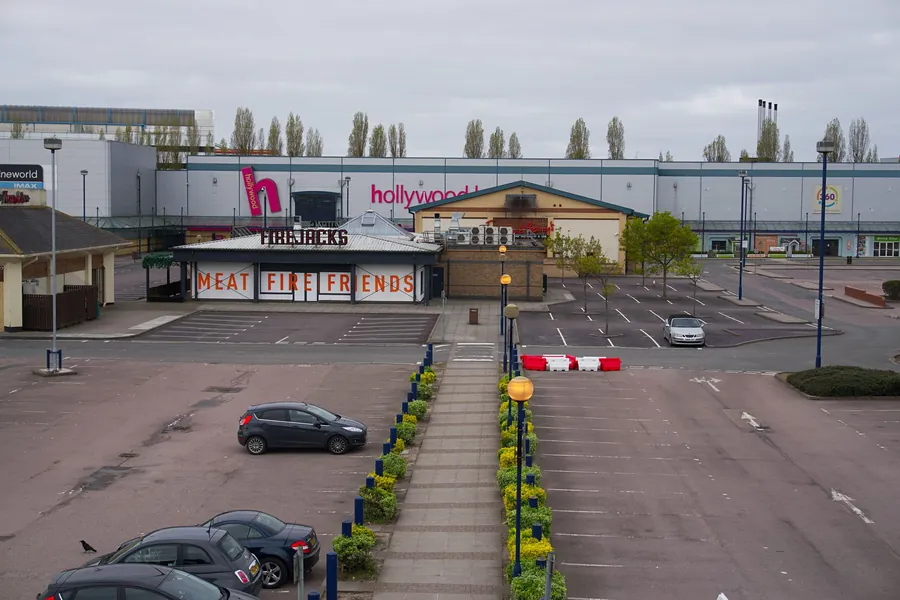
Along the seafront and around the Winter Gardens you get older masonry buildings with parapets, hidden gutters and small flat areas tucked behind them. Behind the shopfronts in the town centre there are parades where one long flat roof runs across four or five separate leases. Then there is the light industrial and retail land inland, out along Locking Road and down around Oldmixon Crescent, where the units run from small workshops up to full warehouse and manufacturing premises, with Junction 21 of the M5 about four miles away and the station within a mile and a half. Those are big, simple, open roofs, and they are a completely different proposition. Most of our commercial flat roofing work sits in one of those three groups.
What we find when we get up there is fairly predictable. Three layer built-up felt on anything put up between the 1970s and the 1990s. Mastic asphalt on the older civic and seafront buildings, often still doing its job at fifty years old. And, increasingly now, early single ply from the 1990s reaching the end of a normal service life. That last group is the one generating most of the quotes at the moment.
Single ply: PVC, TPO, and the three ways it gets held down
Single ply is a factory-made sheet, usually 1.2mm to 1.5mm thick, unrolled across the roof in wide widths and joined by hot air welding the laps together. No flame, no layers, no bonding compound in the seams. Done properly the welded lap is stronger than the sheet itself.
Two polymers do most of the work. PVC is plasticised, which keeps it flexible and makes the welding window generous, but it does not like direct contact with bitumen or expanded polystyrene, so a separation layer goes in where an old felt roof stays underneath. TPO carries no plasticiser to migrate out of it, holds up better against oils and greases, and asks for tighter control of the welding temperature. Both are legitimate. Which one you get usually reflects what the installer welds every week, and that is not a bad reason.
The more consequential decision is how the sheet is attached. Mechanically fastened puts fixings through the membrane and insulation into a metal or timber deck, at a density calculated zone by zone. It is quick and it is the cheapest of the three. Adhered bonds the sheet across its whole face, so there are no penetrations and a lot less noise, which is what you want over an occupied building. Ballasted holds it down with gravel or paving, and only works if the structure was designed for the weight. The Single Ply Roofing Association’s design and specification guidance sets out how those choices should be made rather than assumed, and a quote that does not say which method it is pricing has skipped the question.
Liquid membranes: cold, seamless and good at awkward
A liquid system is waterproofing applied wet, with a fleece or matting reinforcement rolled into it, curing into one continuous sheet with no joints anywhere. Two chemistries cover most commercial work. Polyurethane is more tolerant of imperfect conditions and slower to cure. PMMA, which is an acrylic resin, goes off extremely quickly, often rain resistant inside the hour, which is why it turns up on jobs where the weather window is short or the roof cannot be left open.
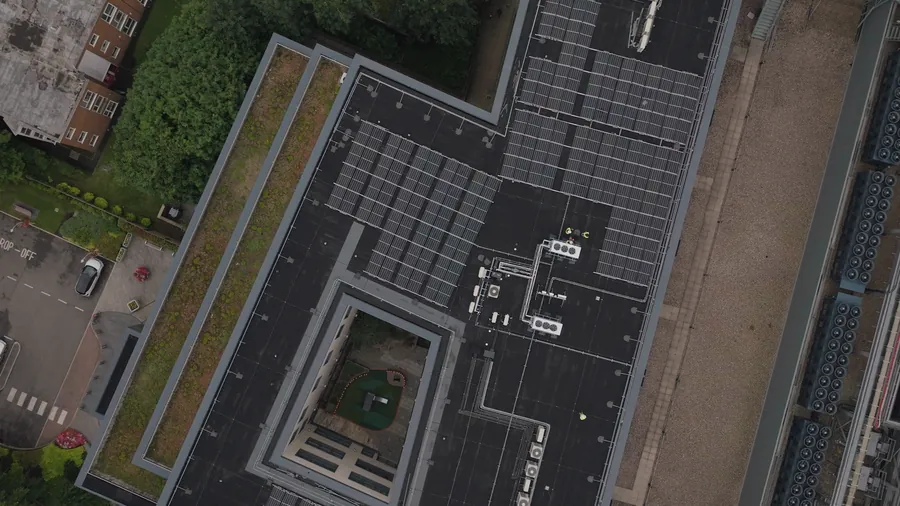
The thing liquid does that nothing else does is go round obstructions without a detail being invented for it. Plant plinths, cable trays, duct legs, handrail bases, a cluster of six pipes coming through in one square metre. A sheet system needs a cut, a weld and a collar at every one of those. A liquid system simply flows round it and carries on.
It is also cold applied, which removes hot works from the job entirely. Over a commercial kitchen, a chemical store or an older timber structure, that alone can decide the specification. The catch is that preparation is not a stage of the work, it is most of the work, and a liquid quote that looks cheap has almost always been cheap about the preparation. We went through where that line falls in our piece on when a liquid overlay is worth paying for, and the same logic scales up to a unit roof. The Liquid Roofing and Waterproofing Association’s technical guidance is the reference point for what a competent specification should contain, including the BS 6229 code of practice that sits behind all flat roof design in this country.
Built-up felt is still the right answer on some roofs
There is a certain amount of snobbery about felt on commercial work, and it is misplaced. Modern SBS modified bitumen laid as a proper two or three layer system, with a mineral surfaced cap sheet, is a mature, repairable, well understood covering with fifteen to twenty years in it.
Where it holds its own is exactly where single ply struggles. Small roofs. Heavily detailed roofs. Roofs where the budget is what it is and the building has eight years left on the lease. Felt is also the easiest of the three to patch in an emergency by whoever is available on a Saturday, which on a trading building has a value that does not appear in any comparison table.
The cost is hot works. A torch on the roof means a permit, an exclusion zone, isolating the fire alarm, and a fire watch kept up for a good while after the last flame goes out. Landlords and insurers increasingly do not want that conversation at all, and on some leased units the answer is now simply no. That is the single biggest reason felt has lost ground on commercial buildings, rather than any failing in the material.

The detailing decides it, not the field
Here is the part that gets missed. On almost every commercial roof we survey, the open middle is fine. What has failed is an upstand, an outlet, a kerb or the seal round something bolted through the covering years after it was laid.
That reframes the whole comparison. If your roof is a plain rectangle with two outlets, single ply will go down fast and cost less per square metre than anything else. If your roof has an air handling unit, a lift overrun, four extract stacks and a walkway, the field area is almost irrelevant, because the money and the risk are both in the hundred metres of upstand and the twenty penetrations.
Which is why the honest answer on a lot of Weston buildings is both. Single ply across the open area, liquid applied round the plant, the kerbs and the perimeter, welded and bonded together into one system with one guarantee behind it. That is not a compromise or a fudge. It is using each material for what it is good at, and any commercial roofer who talks about the two as rival religions rather than complementary tools has probably only ever fitted one of them.
What the Bristol Channel does to the sums
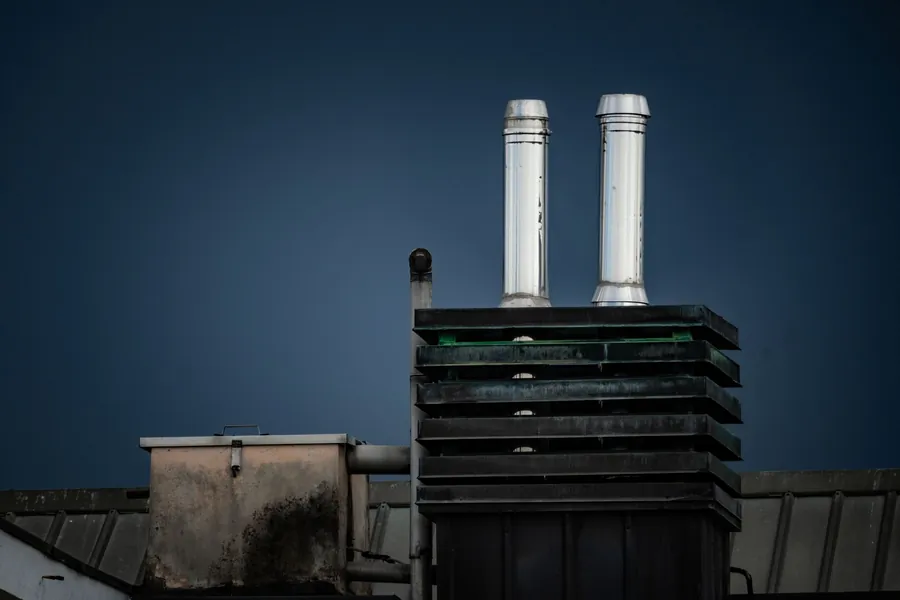
Salt is the first thing people raise and the least important. Salt corrodes metal. It does nothing meaningful to PVC, to a cured acrylic resin or to bitumen. What it eats is everything metal that holds those coverings in place, which means the fasteners, the edge trims, the outlet spigots, the counter flashings and the galvanised feet under rooftop plant. On the seafront side of town that is a stainless steel specification rather than a coated carbon steel one, and the price difference is trivial against the cost of a trim letting go in year seven.
Wind is the serious one. The Bristol Channel has one of the largest tidal ranges anywhere in the world, and the same open geography that produces it gives a south-westerly a long, uninterrupted run at this coastline. Uplift concentrates at the perimeter of a roof and multiplies again at the corners. On the exposed ground inland from the seafront, an adhered single ply system or a mechanically fastened one with a properly zoned fixing pattern is not an upgrade, it is the minimum. A roof fixed at one spacing across the whole area is both less safe at the corners and more expensive in the middle than it needed to be.
Then there is ultraviolet. Single ply membranes carry UV stabilisers as standard and PMMA holds its colour and its surface well. Some polyurethane systems want a topcoat over them, and where that topcoat has been left out of the specification, the guarantee period and the realistic service life stop being the same number.
North Somerset Council, conservation areas and the paperwork
Two separate approvals can apply, and people routinely confuse them.
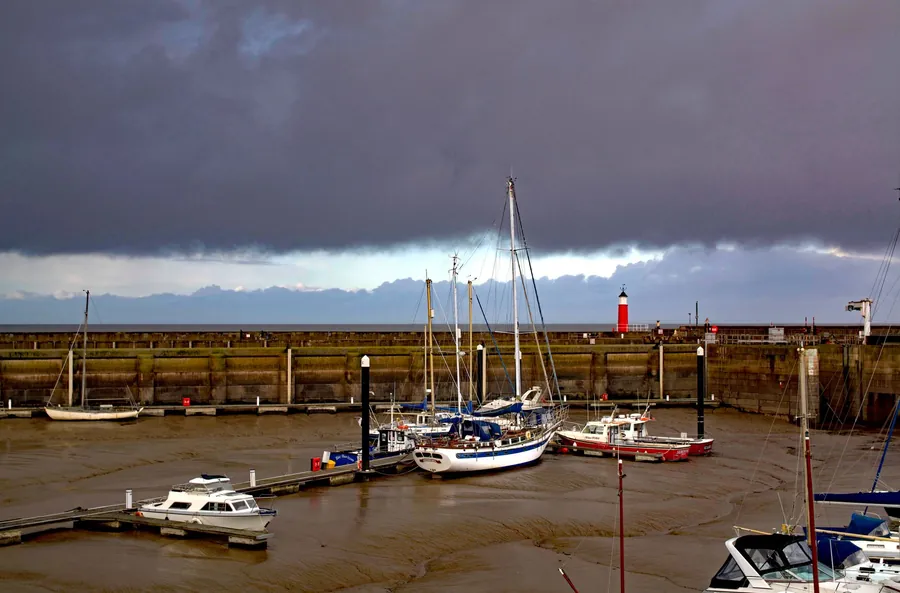
Building control comes first. Re-covering more than half the area of a roof counts as renovating a thermal element, which means the insulation has to come up to current standards as part of the job rather than being left as found. On a large unit that has real consequences: the build-up gets taller, door thresholds and outlet levels move, existing upstand heights may no longer be adequate, and occasionally the deck has to be checked for the extra load. Applications for the town run through North Somerset Council’s planning and building control service, and it is a conversation to have before the quote is accepted rather than after the scaffold is up.
Planning is the second one, and it bites on a narrow band of buildings. The Great Weston Conservation Area was adopted in December 2018, pulling together what had previously been the separate Birnbeck, Beach Lawns, Ellenborough Park, Boulevard and Montpellier and Melrose areas, along with the town centre and Whitecross, into one designation with four character appraisals behind it. A re-cover that nobody can see is rarely an issue. New plant on a visible roof, a raised parapet or a change of surface colour on something overlooked from the promenade is a different matter. It is worth knowing that the Winter Gardens Pavilion, built between 1923 and 1927 to a T.H. Mawson design and refurbished by Weston College in 2017, is not a listed building yet still sits inside that conservation area. Not listed does not mean not constrained.
So which one is your roof asking for
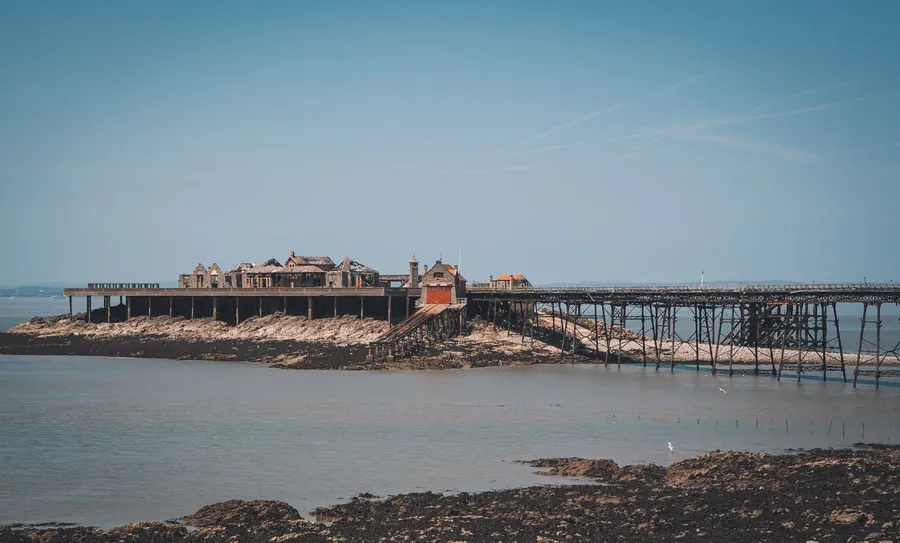
Large, plain, inland, not much on top of it, and the structure will take fasteners: single ply, mechanically fastened, and it will be the cheapest per square metre by a clear margin.
Occupied below, covered in plant, impossible to strip without shutting something down, or carrying a hot works ban: liquid applied, with a proper survey first to prove the existing build-up is dry enough to take it.
Small, complicated, tight budget, eight years left on the lease and nobody objecting to a torch on site? Built-up felt still does that job perfectly well, in three layers, fitted by somebody who will still answer the phone in five years.
And on a fair proportion of Weston’s commercial roofs, the right answer uses two of the three. If you want a straight opinion on which group yours falls into, ask us for a survey and a written quote and we will tell you, including when the cheaper option is the better one.
Frequently Asked Questions
Is single ply better than built-up felt on a commercial roof?
On a large, reasonably plain roof, usually yes. The sheets are wide, the laps are welded rather than layered, the finished build-up is lighter on the structure and nothing gets set alight to install it. On a small roof covered in kerbs, ducts and plant feet, the advantage shrinks fast, because most of the labour is in the detailing rather than the open field. That is the point at which felt or a liquid system starts to look sensible again.
Can a liquid membrane be applied over an existing commercial flat roof?
Often, and it is one of the main reasons liquid systems get specified. The conditions are that the existing build-up has to be dry, bonded and structurally sound, and the preparation has to be done properly rather than quickly. A moisture survey or a few core samples will tell you which camp your roof is in. Coating over trapped water does not remove the water, it just puts a guarantee on top of it.
Does a commercial flat roof replacement in Weston-super-Mare need building regulations approval?
Re-covering more than half the area of a roof counts as renovating a thermal element, which brings the insulation up to current standards as part of the work. That changes build-up height, door thresholds, outlet levels and sometimes the load on the deck. North Somerset Council is the authority for the town, and the application goes through its building control service. A straight like-for-like patch repair does not trigger it.
Which flat roof system copes best with salt and wind on the Weston seafront?
All three coverings are indifferent to salt, because salt corrodes metal rather than polymer or bitumen. The parts that suffer are the fasteners, the edge trims, the outlets and the feet under rooftop plant, so the specification for those matters more than the membrane on top of them. Wind is the other half of the answer, and on exposed ground an adhered system or a properly zoned fixing pattern is what keeps the covering attached.
Free Flat Roof Survey
Somebody comes out, walks the roof and tells you what is wrong before mentioning a price. Anywhere across Weston-super-Mare and North Somerset.