
2 September 2026
Storm Damage To A Flat Roof In Weston-super-Mare: What The Wind Actually Does
Why Bristol Channel gales lift flat roofs rather than crush them, what to check after a storm in Weston, and what buildings insurance will and will not pay for.
Weston sits on the mouth of one of the windiest estuaries in Britain, and every winter the same thing happens somewhere in town. A gale comes through overnight, and in the morning somebody finds half a flat roof folded back on itself like the lid of a sardine tin, or a strip of felt wrapped round a fence two gardens away. It is one of the few roofing problems here that arrives all at once rather than creeping up over years.
What surprises people is the mechanism. Wind does not push a flat roof down. It pulls it up - and it does that hardest at exactly the places most likely to be skimped. Understanding that changes what you look for after a storm, what you ask a roofer, and how much of a case you have with an insurer.
Suction, not pressure
Air moving across a flat surface accelerates over it, and accelerating air drops in pressure. The result above your roof on a rough night is negative pressure - suction - trying to lift the covering off the deck. The room below stays at normal pressure, so the membrane is caught between the two and pulled upward.
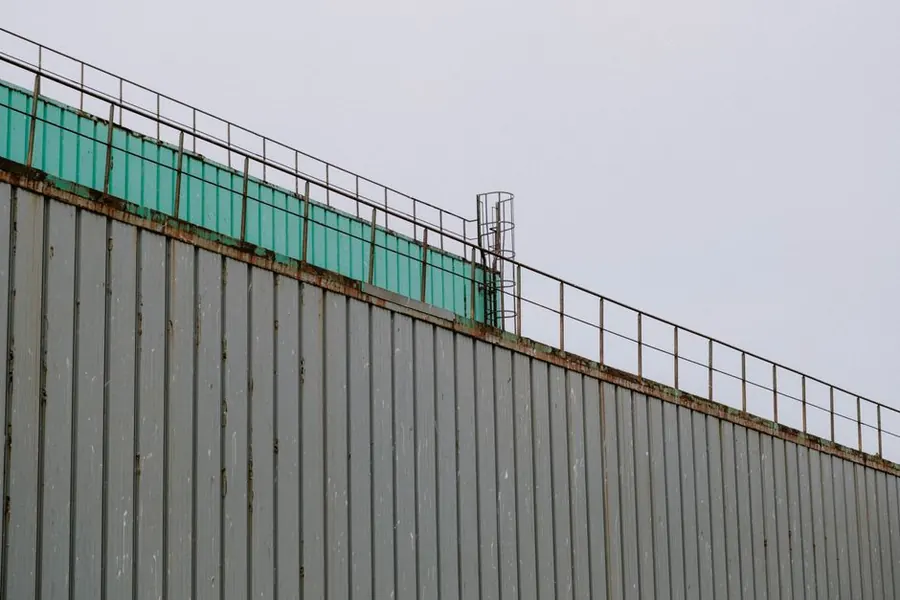
That suction is not spread evenly. It is modest across the middle of the roof, considerably higher in a band around the perimeter, and highest of all at the corners, where the airflow separates and swirls. Roofing specifications reflect this by increasing fixing density in perimeter and corner zones, sometimes by a factor of two or three against the field of the roof.
Which explains the pattern we see. Failures start at an edge. Wind finds a gap at a trim, gets underneath, inflates the covering into a balloon and then unzips it back across the roof in seconds. The middle of the roof was never the weak point; it simply went along for the ride.
Why Weston gets more of it than most of Somerset
Exposure is not a general quality of a region. It is specific to where a building stands, and Weston has a set of conditions that stack up badly.
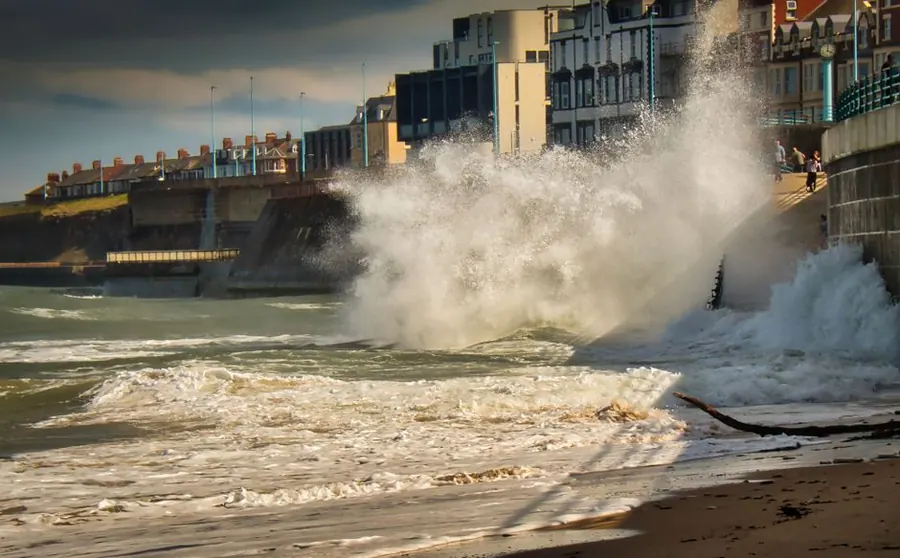
The town faces west into the Bristol Channel with nothing but open water between it and the Atlantic weather systems that come up the estuary. There is no meaningful shelter in that direction. Air arriving over water has not been slowed by hedges, buildings or hills, so it hits the seafront at close to full speed and stays fast for a good way inland.
Then there is the shape of the town. The seafront blocks from Knightstone round to Uphill take the raw hit, but wind funnelling between tall terraces produces local gusts well above whatever the forecast said. Worle and the slopes below Bleadon Hill get a different problem again - wind spilling over high ground and dropping onto roofs from an angle they were never detailed for. The Met Office’s UK storm centre is the sensible place to check what is actually coming, and named storms tracking up the Channel usually give the town a rough night before they give anywhere in east Somerset one.
The practical upshot: a roof detail that has been perfectly adequate on a sheltered plot near Glastonbury for two decades can be genuinely underspecified on the Weston seafront. Same materials, different site, different answer.
What fails, and roughly in what order
Storm damage on flat roofs follows a sequence, and knowing it makes the morning-after inspection much quicker.
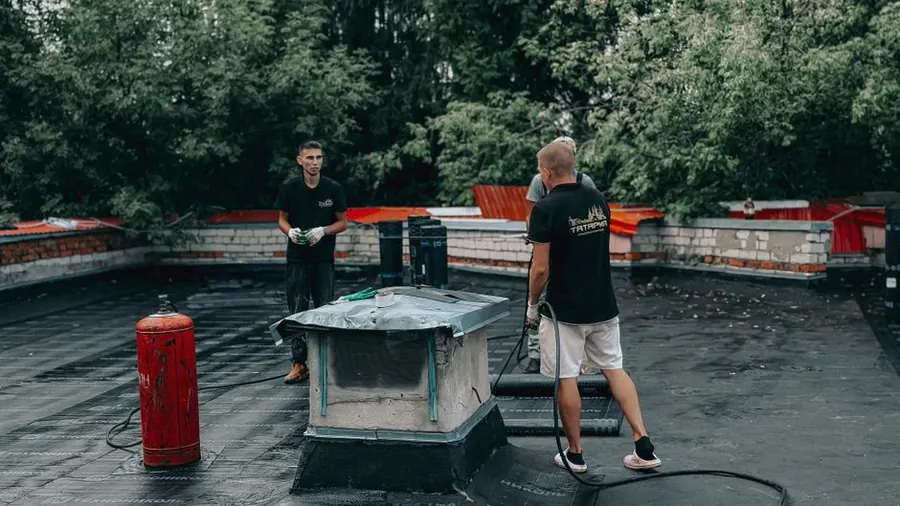
Metal edge trims go first, because they are the interface between the wind and everything else. A trim that has lost a screw or two rattles for a season, then goes entirely, and takes the edge of the membrane with it.
Laps and seams are next. On older felt in particular, the adhesion at a lap degrades long before the sheet itself does, and a gale finds that weakness before you do.
After that, upstands and flashings where the roof meets a wall. Anything relying on a bead of sealant instead of a chased-in or mechanically fixed termination will eventually be worked loose by repeated wind loading, and once it is loose, driven rain goes straight in behind it.
Then the whole covering, if the perimeter has failed. And separately from all of it, impact damage: something else’s roof, a fence panel, a satellite dish or a branch landing on yours. On a pitched roof that mostly breaks a tile. On a flat roof it can punch a hole clean through the membrane and the insulation beneath.
The morning after: what to check without going up
Nothing you might see on the roof is worth the fall, and a partially lifted membrane is genuinely dangerous to stand on. Almost everything useful can be established from the ground and from inside.
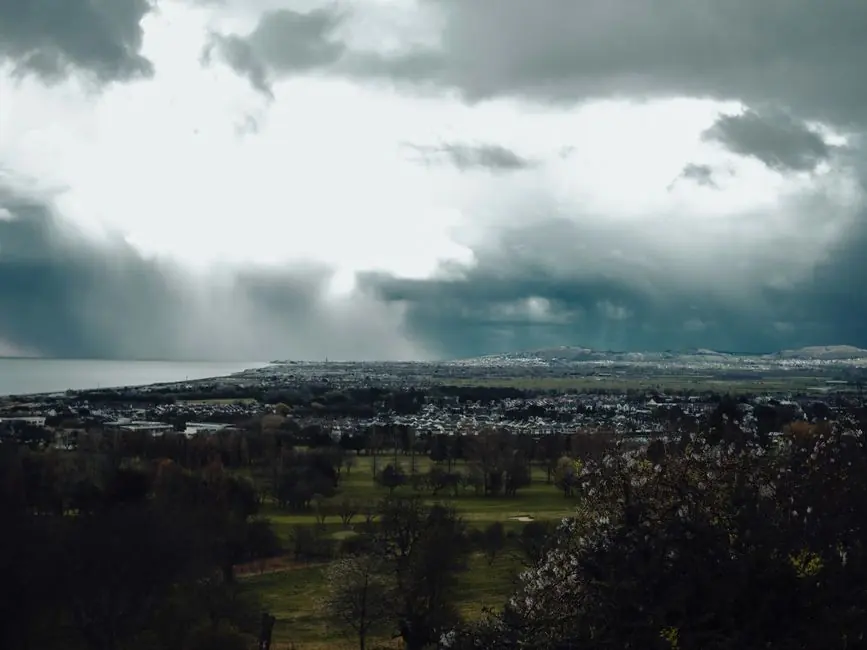
Walk the perimeter of the building first and look up at the edges of the roof from every angle you can get. A trim out of line, a rippled edge, or daylight visible under a lip all say the perimeter has moved. Check your own garden and the neighbours’ for pieces of membrane, insulation board or lengths of metal trim - roof material on the ground is the clearest evidence there is, so photograph where it landed before you pick it up.
Look at the gutters and downpipes, which take a beating in high wind and often come loose at the brackets. Then go inside and check the ceiling under the flat roof in daylight, including corners and the junction with the wall. Fresh water damage is darker and cooler to the touch than an old stain, and the edge of it will still be sharp.
Take photographs of everything, wide and close, before anybody touches anything. If flooding came with the wind, North Somerset Council’s flooding advice for residents covers reporting and what help is available locally.
Gulls, grit and the things the wind carries
Coastal storms do not arrive empty-handed, and in this town one of the things they bring is birds.
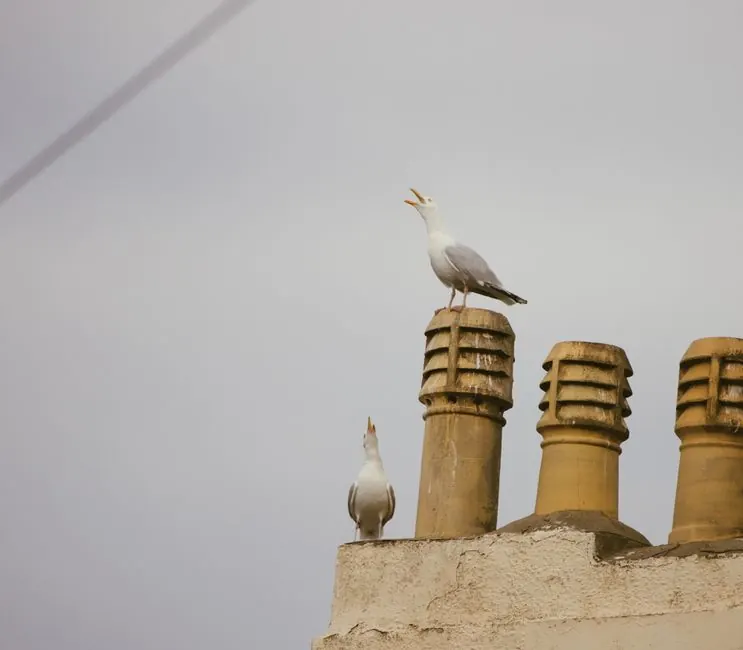
Weston’s herring gulls treat flat roofs as prime real estate - warm, level, undisturbed, and safe from everything that walks. That is tolerable until nesting material and feathers wash toward the outlet in the first heavy rain and block it. The roof then holds water it was never designed to hold, and a covering that was coping fine starts leaking at a lap under the extra load. We see the consequence of that far more often than we see actual bird damage to a membrane.
Wind-borne grit is the other quiet one. Sand off the beach and off Sand Bay is abrasive, and years of it scours the surface finish from a covering, particularly at the exposed edges. It is not dramatic - it just takes life off the roof steadily, which is why seafront roofs generally do not last as long as the same system in Banwell.
And then the obvious: anything loose within a few hundred metres becomes ammunition in a gale. Trampolines, fence panels, garden furniture and other people’s roof material all end up somewhere, and a flat roof is a very easy thing to land on.
Making it safe without making the claim harder
There is a narrow path between leaving a hole open in November and doing something that costs you money later.

Temporary protection is expected of you. Insurers require policyholders to prevent further damage where reasonably possible, and a professionally fitted temporary cover is the right response to an open roof. What is not sensible is a full permanent repair before the insurer has had the chance to inspect, because you have then removed the evidence and are asking them to take your word for what was there.
The sequence that works: make it safe, photograph it thoroughly, log the claim, keep every invoice including the temporary work, and hold off on the permanent repair until you have the go-ahead. If the damage is severe enough that the building is unsafe, say so on the phone - that changes how quickly things move.
Do not let anyone onto the roof who knocks at the door offering to fix it there and then. The morning after a storm is when doorstep operators work a seaside town, and a great deal of poor flat roofing in Weston was sold in exactly those circumstances.
What insurers mean by “storm damage”
This is where claims come apart, and it pays to understand it before you make one.

Insurers apply a three-part test, set out plainly in the Financial Ombudsman Service’s guidance on storm damage complaints. Were there storm conditions on or about the date claimed? Is the damage of a type consistent with a storm? And was the storm the actual cause of the damage, rather than something else?
Flat roofs tend to fall at the third hurdle. If a covering was already at the end of its life, an insurer will argue that ordinary winter weather finished off a roof that was going anyway, and gradual deterioration is excluded on every buildings policy. That argument is not always fair, and it is not always right - but the way to answer it is with evidence: maintenance records, previous inspection reports, photographs showing the roof in reasonable condition before the storm.
Which is the argument for keeping an eye on the thing before you need it. A roof with a documented history is a roof you can make a case for. If yours is old enough that a claim would be a stretch, the honest question is whether it needs repairing or replacing anyway, rather than waiting for a gale to make the decision.
Detailing a roof that survives the next one
Wind resistance is a design decision, not luck, and it costs very little extra at the point of installation. That is the frustrating part of most of the failures we attend.
The perimeter is the whole game. Fixings at the correct spacing for an exposed site, with the density increased in the corner and edge zones. Metal trims mechanically fixed, not simply dressed over the edge. Upstands taken at least 150mm above the finished surface and terminated into the wall properly rather than sealed at the top and hoped for. Rooflight kerbs and pipe collars detailed the same way, because they are edges too.
Then the sensible maintenance that keeps a roof out of trouble: clearing outlets twice a year, before autumn and again in late winter, and having someone look over the trims and laps after a serious blow rather than waiting for the ceiling to tell you. Our EPDM rubber roofing work suits exposed sites here partly because a single sheet has no laps for the wind to find - on a coastal roof, the fewer joints there are, the fewer places a gale can start.
None of this makes a roof invincible. It makes the difference between a night of noise and a morning of phone calls. If yours took a beating in the last storm, or you would rather find out where it stands before the next one, book a free roof check and we will tell you honestly what we find.
Frequently Asked Questions
Can wind really lift a flat roof?
That is the main way flat roofs are damaged in storms. Wind flowing over a flat surface creates suction above it rather than pressure on it, and the suction is strongest at the edges and fiercest at the corners. If the covering is not held down properly at its perimeter, the wind gets under an edge, inflates the membrane like a sail and peels it back. Almost every wind failure we attend in Weston started at a trim, a verge or a corner, not in the middle of the roof.
What should I do first after storm damage to a flat roof?
Stay off the roof. A membrane that has lifted is loose underfoot and the wind may not have finished. From the ground, photograph everything you can see, including the wider scene, then move what is under the leak and put buckets down. Ring your insurer to log the claim before arranging permanent repairs, and get a roofer out to make it safe temporarily. Photographs taken before anything is touched are what claims turn on.
Will buildings insurance cover a flat roof damaged in a storm?
It can, but the policy has to be satisfied on three points: that storm conditions genuinely occurred around the date claimed, that the damage is consistent with those conditions, and that the storm was the main cause rather than an already worn-out roof. A sound covering stripped by a named storm is a straightforward claim. A perished twenty-five-year-old felt roof that lost a corner in a gale usually is not, because the insurer will attribute it to wear and tear, which every policy excludes.
Do gulls damage flat roofs in Weston-super-Mare?
Not usually by pecking at a sound membrane, though it does happen where a covering has already blistered. The bigger problems are indirect. Nesting material and feathers block outlets, which is how a roof that was draining fine in September ponds badly in November. Gulls also drop shells and debris onto roofs, and they will pull at anything loose, so a lifted lap gets worked at rather than left alone.
How is a flat roof made more wind resistant?
By fixing the perimeter properly and detailing the edges so wind cannot get underneath. That means a mechanically fixed or fully bonded edge with the correct fastener spacing, metal trims screwed down rather than dressed over and hoped for, upstands taken high enough and terminated into the wall rather than surface sealed, and any loose-laid or ballasted areas weighted to suit an exposed coastal site. Fixing density is increased in the perimeter and corner zones for exactly this reason.
Free Flat Roof Survey
Somebody comes out, walks the roof and tells you what is wrong before mentioning a price. Anywhere across Weston-super-Mare and North Somerset.