
15 September 2026
How Long Does A Flat Roof Replacement Take In Weston-super-Mare - And What Weather Stops The Work?
Day-by-day timings for a garage, an extension, a dormer and a small commercial roof, plus the temperatures, damp and Bristol Channel wind that halt each system.
A single garage roof is a day. A rear extension is two or three. A small commercial roof is measured in weeks. Those are the answers most people want, and they are broadly right - but the honest version needs a second sentence, which is that the date in the diary matters more than the number of days on it.
Flat roofing is one of the few trades where the material itself has an opinion about the weather. EPDM bonding adhesive generally wants the deck above 5°C and properly dry. Fibreglass cures through a chemical reaction that slows right down as the thermometer drops. Torch-on felt handles cold better than either and wind worse than both. So a three-day job in June really is a three-day job. The same roof in late November is three days of work spread across whatever dry, still window the week is willing to offer.
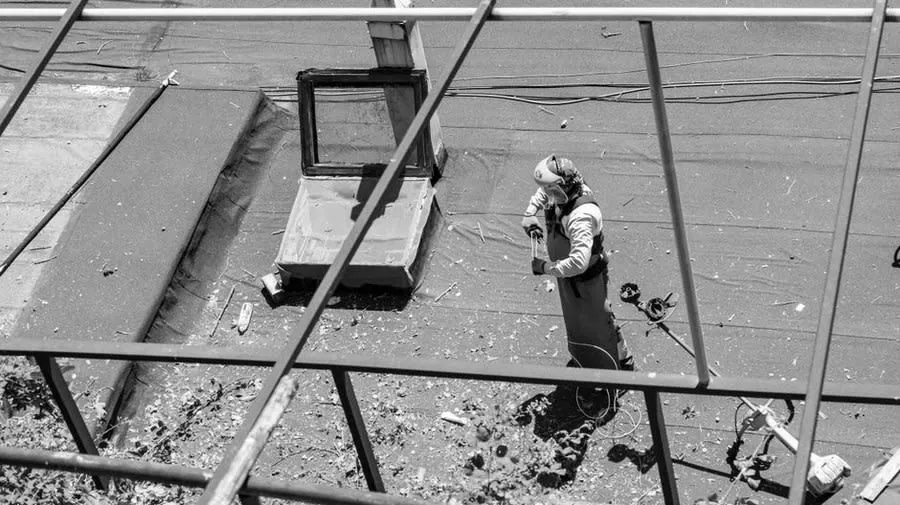
Watch: how long each size of roof really takes, and the days weather takes off you.
Day one tells you what the job really is
Almost nothing about a replacement is certain until the old covering is off, which is why day one carries more weight than the rest of the week put together.
The morning goes on stripping. Old felt comes up in sheets, fibreglass comes off in stubborn plates, and everything goes straight into a skip or a van because there is nowhere on a Weston terrace to leave it. By late morning the deck is bare and visible for the first time since it was built, and that is the moment the roofer finds out whether the estimate holds. Soft boards get marked, edges get prodded, joist ends near the gutter get a screwdriver pushed into them.
Assuming the deck is sound, the afternoon is preparation rather than waterproofing: sweeping, refixing loose boards, sorting the falls, cutting firrings where the surface has dipped, fitting new edge trims. On a small roof you might see the first layer go down before the crew leaves. On an EPDM re-cover the rubber often gets rolled out flat and left to relax overnight, so the sheet loses its memory of the roll before anyone reaches for adhesive. A roof that looks untouched at five o’clock has usually had its most important day.
Garage, extension, dormer, small commercial: realistic timings
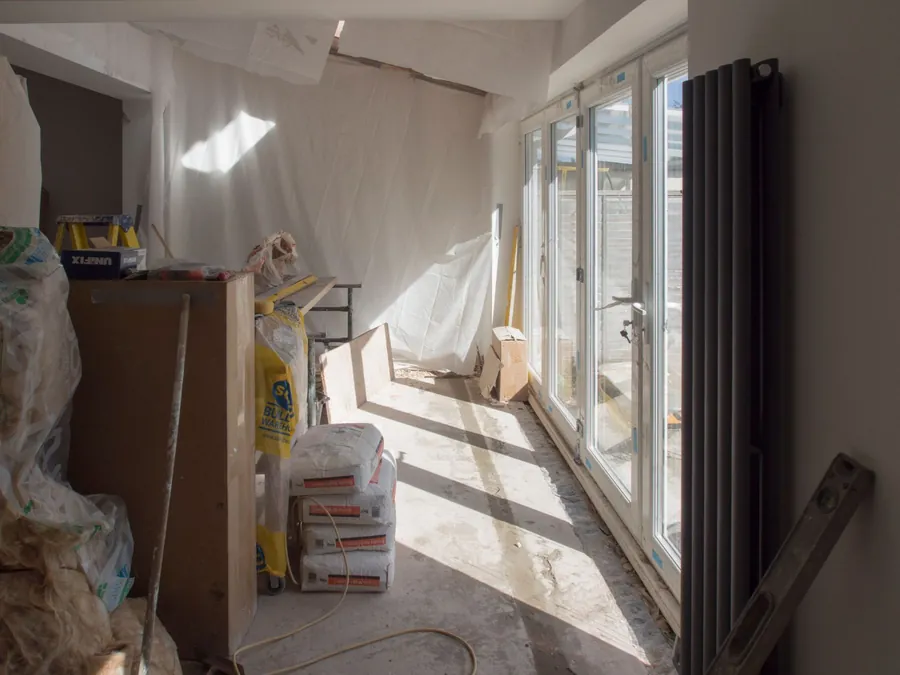
A single garage is the quickest roof in the trade. Fifteen or so square metres, ground-level access, no ceiling below to protect. One day covers strip, deck check and a new covering, and the only thing that reliably turns it into two is a chipboard deck that has to come out. Garages across Milton and Ashcombe swallow more re-decking than anything else we price.
A single-storey rear extension roof normally runs two to three days. The area is not much bigger than a garage, but everything around the edge is harder: an abutment against the house wall that needs chasing in, a threshold under patio doors with barely any height to play with, rooflight kerbs, a gutter that has to be reset. Add a warm roof build-up with insulation boards and a vapour barrier and you are into three or four.
Dormers are where people’s guesses go wrong. The flat area on top of one might be four square metres, yet the job takes two to four days, because it is nearly all detailing: cheeks, upstands, a window head, lead or trim work at every junction, and scaffold to reach any of it. Square metres are a poor guide to time on any roof with more edge than middle.
Then there is the small commercial roof of one to three hundred square metres, which gets planned in weeks. Not because the laying is slow. Because it is done in bays so the building underneath is never left open, and because plant, vents and outlets all need working around.
The deck is the part nobody can price from the ground

Every honest quote for a flat roof contains one guess, and this is it. The covering is visible and measurable. What it is fixed to is not, and a roof that has been leaking slowly for three winters has been feeding water into its deck the whole time.
Timber that has stayed wet loses strength long before it looks dramatic. Chipboard is the worst offender - it swells, delaminates and turns crumbly, and it cannot hold a fixing once it has. Older softwood boarding tends to fail at the perimeter first, where an overflowing gutter has kept one line of timber damp for years. Occasionally the joists themselves are wet at the wall plate, and that is a carpentry job rather than a roofing one.
Replacing a full deck in 18mm OSB adds most of a day on a garage and a day or more on an extension, plus a wait for materials if nobody saw it coming. It only turns into an argument when the quote was silent about it. A roofer who has actually been up and inspected the roof, rather than squinting at it from a ladder, will have formed a view on the deck before the strip starts, and the quote should carry an agreed rate per board or per square metre so the mid-job phone call is about quantity rather than price. Rebuilt structure also has to end up resisting moisture properly, which is the substance of Approved Document C, the government guidance on resistance to moisture.
Cold, damp and the dew point: what actually halts each system
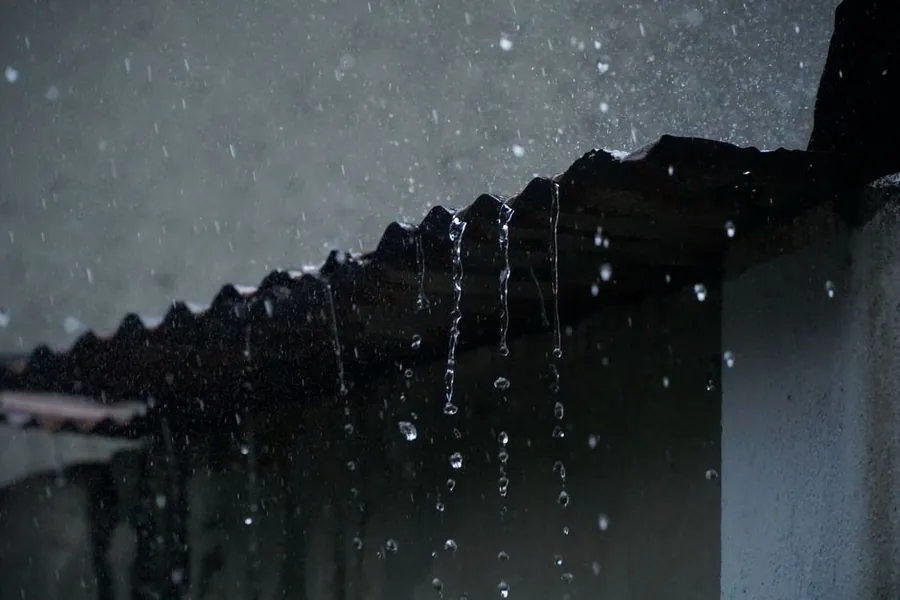
The three common systems fail in the cold for three different reasons, and knowing which one is going on your roof tells you how the winter will go.
EPDM rubber
Rubber itself does not mind the cold. The adhesives do. Both the deck adhesive and the seam products are formulated to be applied above roughly 5°C, and that figure refers to the temperature of the surface being stuck to, not the air. A deck that has been frosted overnight can still be below the line at eleven in the morning while the air feels mild. Apply adhesive too cold and the bond is weak in a way that does not show up until a winter gale finds the edge.
GRP fibreglass
Fibreglass is the fussiest of the three, because it is a chemistry set rather than a sheet. The resin cures by reaction, and the catalyst has to be adjusted for the conditions - more in cold weather, less in hot, or the roof either never goes off or goes off in the bucket. Below about 5°C the reaction becomes unreliable, and the topcoat needs a dry period after laying to harden. A damp autumn afternoon is genuinely worse for GRP than a cold, crisp one.
Torch-on felt
Felt is the winter workhorse, since the heat arrives with the torch and the deck dries under the flame. Its restrictions sit elsewhere. Torching near timber, cavities and roof edges carries a real fire risk, which is why the NFRC’s Safe2Torch guidance sets out where a flame should not be used at all and what to use instead at those details.
The one that catches everybody: dew point
The most common reason a crew arrives at eight and starts at ten has nothing to do with rain. On a clear night a flat roof radiates heat and its surface drops below the air temperature, so it wakes up with a film of condensation on it even though the forecast said dry. Nothing bonds to that film. It has to burn off, and from October onwards that can take until mid-morning. It is the reason an autumn roofing day is shorter than a summer one, and the reason the same job quoted at three days can occupy the best part of a week.
Wind off the Bristol Channel is the local factor
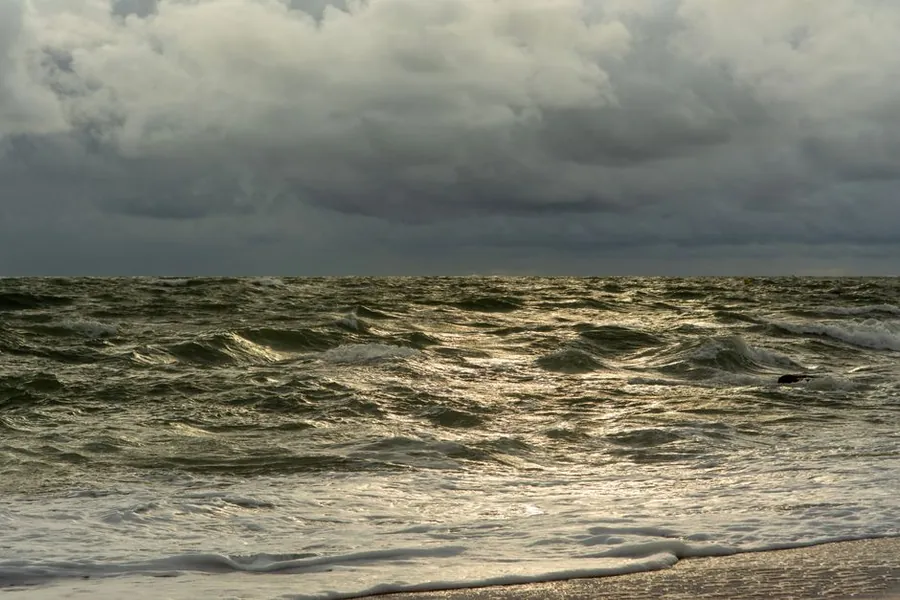
Ask any roofer who works this stretch of coast what costs them more days than rain, and the answer is wind. Weston sits open to the west with the water right there, and the sea breeze builds through the afternoon on days that started still. A roof in Bleadon or Banwell can be workable while the same job in Uphill is not.
Wind matters to flat roofing more than to tiling, because flat roofing means handling large sheets of material. An unbonded length of EPDM catches air like a sail and can lift a man off balance. Insulation boards go over the parapet in a gust. A gas torch is difficult to control in moving air, and hot work near a roof edge in wind is exactly the combination nobody sensible accepts. The HSE’s guidance on roof work treats weather as part of planning the job rather than an excuse afterwards, and stopping in a rising wind is the correct professional decision, not a slow day.
A still, cold, bright day is often more productive here than a mild grey one. So if work stops on your roof while the sun is out, wind is usually the reason. The same forces that end the working day also decide how the finished roof has to be fixed down, which is covered properly in our piece on what storm winds do to a flat roof. Anyone booking coastal work between October and March should be checking the Met Office’s UK weather warnings the night before, not on the morning.
Why commercial roofs are not simply slower
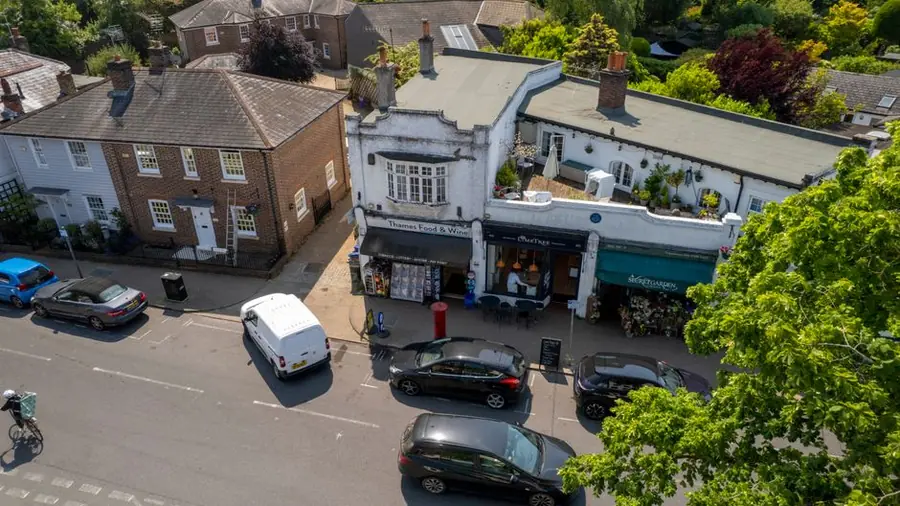
A shop parade roof or a small industrial unit does not take ten times as long as a garage because it is ten times bigger. It takes longer because it is never allowed to be open.
The work gets divided into bays, each one sized so it can be stripped, decked, insulated, waterproofed and sealed to the existing covering within a single day. That discipline is what keeps stock dry and the doors open, and it is why a commercial programme is quoted in weeks even when the actual laying would take days. Rooftop plant, extract vents, cable trays and outlets all need their own detailing, and each is a small job of its own.
The upside is that this way of working is far more weather-resilient than domestic roofing. A bay that can be closed by four o’clock is a bay that a five o’clock shower cannot hurt. We go through the whole approach in replacing a commercial roof while the business stays open, including how the sequencing is agreed before anyone climbs the scaffold.
What actually protects your start date
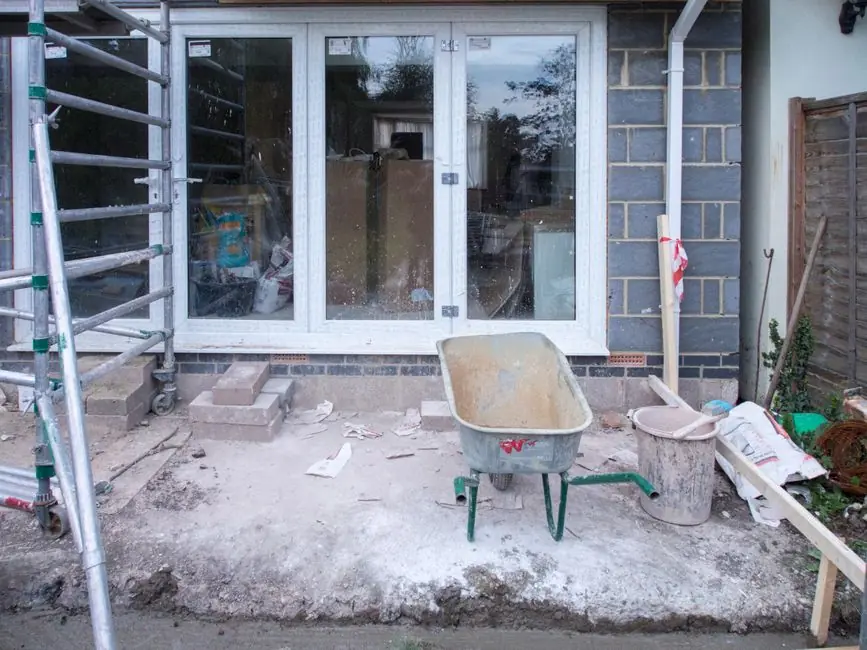
Whether a quoted three-day job finishes in three days has very little to do with luck.
Most of it is simply not opening more roof than can be closed again by knocking-off time. A crew that strips the whole surface on Monday morning because it is quicker that way is betting your ceiling on the forecast. Working in sections looks slower on paper and finishes sooner in practice.
The rest is preparation. Temporary sheeting on an exposed coastal roof needs proper weighting and fixing, not four blocks and optimism, and it wants to be on the van before it is needed rather than fetched once the sky changes. And the system should suit the season it is being laid in. A January job on an exposed roof will get finished in felt while a fibreglass one sits waiting for a dry spell, which is a conversation for quote stage rather than week two.
The practical questions to ask before agreeing dates: what happens if the deck is worse than expected, how much roof will be open at any one time, and what the plan is if the wind gets up on day two. A roofer who answers all three without hesitating has done this through a Weston winter before.
If you want a straight answer on how long yours will take and when it can realistically start, book a free flat roof survey - we cover Weston-super-Mare, Worle, Uphill and the surrounding villages.
Frequently Asked Questions
How many days does a flat roof replacement take?
A single garage is usually one day, or two if the deck has to come up. A single-storey rear extension roof is commonly two to three days, stretching to four if a warm roof build-up and new upstands are part of it. A dormer is two to four days because almost all of the work is fiddly edge detailing rather than open surface. A small commercial roof of a couple of hundred square metres is planned in weeks rather than days, usually in bays.
Can a flat roof be fitted in the rain?
Nothing gets bonded down in rain. Stripping and decking can carry on in light drizzle if there is cover to hand and the deck goes back dry, but every waterproofing system on the market needs a dry substrate to stick to. What a good crew does in unsettled weather is work in sections small enough to be sealed and made watertight before the next shower, rather than opening the whole roof and hoping.
What temperature is too cold for a new flat roof?
Around 5°C is the line most product data sheets draw, and it refers to the surface temperature of the deck rather than the air. Below that, EPDM bonding adhesives stop grabbing properly and fibreglass resin cures so slowly that the day runs out before the roof is hard. Torch-on felt is the most cold-tolerant of the three because heat is applied directly, which is why winter work in Weston tends to drift towards felt systems.
Does wind delay flat roofing work in Weston-super-Mare?
More often than rain does, and it is the single most local thing about roofing here. An eight metre sheet of rubber behaves like a sail long before the weather looks dramatic from the ground, and open flames near the seafront are harder to control than anywhere inland. A crew working in Uphill or along the front will frequently down tools on a bright, dry, breezy day that looks perfect through a kitchen window.
Free Flat Roof Survey
Somebody comes out, walks the roof and tells you what is wrong before mentioning a price. Anywhere across Weston-super-Mare and North Somerset.